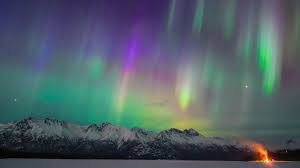
G3 Geomagnetic Storm Unleashes a Dazzling Aurora Show Worldwide
A powerful G3 geomagnetic storm recently painted the skies with vibrant colors, delivering a spectacular display of the northern and southern lights far beyond their usual polar limits. From North America to Europe and even Australia, skywatchers were treated to a breathtaking celestial show.
The burst of activity was triggered by a complex wave of solar energy, including multiple coronal mass ejections (CMEs) and a fast stream of solar wind emanating from a coronal hole. According to NOAA’s Space Weather Prediction Center, strong (G3) storm levels were reached over the weekend, creating ideal conditions for widespread aurora sightings.
Stunning Aurora Photos from Around the World
Photographers and aurora chasers captured the magic of the event, sharing incredible images and videos. Here’s a glimpse of the stunning displays witnessed across the globe:
- Alaska, USA: Photographer Hasan Akbas captured a mesmerizing aurora corona – a crown-like effect when the lights appear directly overhead – from Fairbanks, Alaska. He also documented a vibrant curtain of color dancing over the snow-capped mountains.
- Wyoming, USA: Hunter Fowkes witnessed a brilliant show from Cheyenne, Wyoming, describing pillars of light rivaling the brightness of the sun.
- New Mexico, USA: Derick Wilson captured a rare red aurora glow from northwest New Mexico, a remarkable sight at mid-latitudes.
- Iceland: A user on X (formerly Twitter) shared a breathtaking view of the northern lights exploding over downtown Reykjavik.
- England: Paul Clark shared a beautiful timelapse of the aurora dancing over Buttertubs Pass in the Yorkshire Dales.
- Northern Ireland: Alistair Hamill captured faint pink auroras breaking through a hazy sky above the Giant’s Causeway.
- Australia: Skywatchers down under were also treated to a display of the aurora australis (southern lights) from Trentham, Victoria, captured with an iPhone 17Pro.
You can view some of these incredible captures here:
Before the Aurora tried to rival the brightness of the sun at 1:30 am last night, stout pillars during the opening phase of a substorm north of Cheyenne, Wyoming last night. This was still extremely bright. pic.twitter.com/WaGu2W613f
— Hunter Fowkes (@hfowkes) March 21, 2024
Hyperlapse of the short burst of visual aurora about 130am 3/21.@TamithaSkov pic.twitter.com/HsOct9Mpg2
— Derick Wilson (@derickwilson) March 21, 2024
What Causes Geomagnetic Storms?
Geomagnetic storms are disturbances in Earth’s magnetosphere caused by solar wind activity. CMEs and solar flares release massive amounts of energy and charged particles into space. When these particles interact with Earth’s magnetic field, they can cause auroras, disrupt radio communications, and even impact power grids. Learn more about space weather from NOAA’s Space Weather Prediction Center.
Will the Show Continue?
While the most intense period of the G3 geomagnetic storm has passed, minor to moderate (G1 to G2) storm conditions may linger into March 23, according to the U.K. Met Office. Elevated solar wind activity continues to buffet Earth’s magnetic field, offering a continued, albeit potentially less dramatic, opportunity to witness the aurora.