Rocket Launch Today: ULA’s Vulcan Set for Early Morning Liftoff
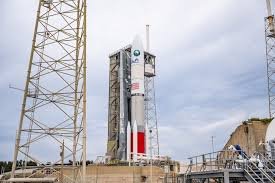
United Launch Alliance (ULA) is poised for a predawn launch of its Vulcan rocket this Thursday morning, marking the company’s first flight of the year. The United States Space Force (USSF)-87 mission carries multiple satellites, though the exact number remains undisclosed. This is ULA’s second national security mission utilizing the Vulcan rocket and represents the company’s longest mission to date.
A Mission Built for Complexity
“This mission will last, in total duration from launch to end of mission, 10 hours,” stated Gary Wentz, ULA’s Vice President of Atlas and Vulcan Programs. “Vulcan was purpose-built to support missions like this – significant payloads to very complex orbits, multi-manifested national security space, and direct to Geosynchronous Earth Orbit (GEO). This mission is tailor-fit for Vulcan, and that’s why we designed it this way.”
Launch Details and Weather Forecast
Liftoff from Space Launch Complex 41 at Cape Canaveral Space Force Station is scheduled for 3:30 a.m. EST (0830 UTC), opening a two-hour launch window. The rocket will follow an easterly trajectory. Spaceflight Now will provide live coverage beginning an hour before liftoff.
The 45th Weather Squadron forecasts a 95% chance of favorable conditions at liftoff. However, they are monitoring solar activity, anticipating “an increased probability of X-ray flares” during the primary and backup launch dates. Light winds overnight may cause shallow mist, potentially decreasing visibility. A weak frontal boundary approaching in the afternoon is not expected to bring significant precipitation.
Vulcan Rocket Configuration
The rocket will fly in a VC4S configuration, featuring four side-mounted Graphite Epoxy Motor (GEM) 63XL solid rocket boosters (SRBs) and a standard 51-foot-long (15.5 m), 17.7-foot-diameter (5.4 m) payload fairing. The SRBs will separate less than two minutes after liftoff, followed by the Vulcan booster’s separation from the Centaur 5 upper stage approximately five minutes into the mission.
Payload: Geosynchronous Space Situational Awareness Program (GSSAP)
The primary payload for this mission, designated V-005, is the Geosynchronous Space Situational Awareness Program (GSSAP) system. The U.S. Space Force’s Space Systems Command (SSC) describes GSSAP as “a high-performance, dedicated Space Surveillance Network sensor” designed to enhance the U.S. Space Command’s awareness of activities in geostationary Earth orbit, roughly 22,000 miles (35,000 km) above Earth.
While the exact number of GSSAP satellites on board remains undisclosed, historical data suggests pairs of satellites have been launched previously. The first two pairs launched in 2014 and 2016, with a more recent pair launched in January 2022. One of the initial satellites, GSSAP space vehicle 2, has been decommissioned and moved to a graveyard orbit.
Additional Payloads and Future Development
In addition to GSSAP, USSF-87 will carry research, development, and training systems. These systems will allow Guardians to refine on-orbit maneuver tactics and enhance resiliency in GEO. These additional payloads will be mounted on Northrop Grumman’s ESPAStar platform.
ULA is also closely monitoring hotfire tests of a full-scale BE-4 engine developed by Blue Origin, intended for use in future Vulcan rockets. Recent issues with a gaseous nitrogen pipeline have been resolved, paving the way for this crucial launch.
Source: Spaceflight Now