SpaceX Launch: Crew-12 Restores International Space Station to Full Capacity
A SpaceX capsule carrying four astronauts has successfully launched on its way to the International Space Station (ISS), marking a crucial mission to restore the orbiting laboratory to its full operational capacity. This journey follows a period of reduced staffing due to an unforeseen medical issue with a previous crew.
Mission Details: Crew-12 Liftoff
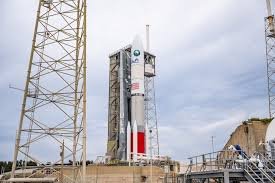
The mission, designated Crew-12, lifted off at approximately 5:17 a.m. ET on Friday from Cape Canaveral Space Force Station in Florida. NASA, relying on SpaceX for astronaut transport, prioritized this launch to address the staffing challenges on the ISS.
Addressing Staffing Shortages at the ISS
The International Space Station had been operating with a reduced crew of three since mid-January, significantly below the desired seven-person staff. This situation arose after the Crew-11 mission was forced to return to Earth early due to an undisclosed medical concern affecting one of its members.
NASA Administrator Jared Isaacman emphasized the agency’s swift and professional response to the situation. “NASA was ready. The team responded quickly and professionally, as did the teams across the agency, working closely with our commercial partners and executed a very safe return,” Isaacman stated during a January news conference, confirming the astronaut’s stable condition. The Crew-11 astronauts underwent evaluation at Scripps Memorial Hospital in La Jolla, California, following their splashdown.
Crew-12: The Team Heading to Orbit
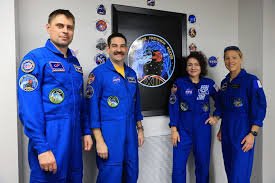
The Crew-12 mission features a diverse team of astronauts: NASA’s Jessica Meir and Jack Hathaway, European Space Agency astronaut Sophie Adenot, and Russian cosmonaut Andrey Fedyaev. They will be instrumental in resuming full-scale research operations aboard the ISS.
Challenges and Preparations
Unlike typical crew rotations, Crew-12 will not benefit from a direct handover with the departing Crew-11. However, Meir confirmed that her team had the opportunity to debrief with Crew-11 on the ground, receiving crucial information about the station’s current status.
Prior to Crew-11’s early departure, the ISS was staffed by two Russian cosmonauts, Sergey Kud-Sverchkov and Sergei Mikayev, and NASA astronaut Chris Williams. Maintaining a robust crew presence is vital for maximizing the productivity of the ISS, which operates at a cost of approximately $3 billion annually.
The Future of Space Exploration
While the ISS has sometimes operated with smaller crews in the past, NASA recognizes the importance of maximizing research opportunities. Isaacman envisions a future with multiple commercial space stations in low-Earth orbit, allowing NASA to focus on deeper space exploration. “I, like a lot of space enthusiasts, dream of the day where we have multiple commercial space stations in low-Earth orbit,” Isaacman said during a Senate confirmation hearing in December.
Research Aboard the ISS
During their approximately eight-month stay, the Crew-12 astronauts will conduct a variety of research projects, including ultrasound scans to study blood vessel changes in space, pharmaceutical research on pneumonia-causing bacteria, and a simulated lunar landing to assess the effects of gravity changes on the human body and cognition. This research is crucial for paving the way for future space exploration and commercial opportunities.
Source: CNN