United States Navy: A Pillar of Global Maritime Power
The United States Navy (USN) stands as one of the world’s most powerful and technologically advanced naval forces. Its history is interwoven with the story of the United States itself, evolving from a small fleet of frigates to a global presence capable of projecting power across the world’s oceans. This article provides a comprehensive overview of the US Navy, covering its history, core missions, modern capabilities, and future outlook.
A Historical Voyage: From Humble Beginnings to Global Dominance
The US Navy was officially established on October 13, 1775, with the intent of disrupting British naval supply lines during the American Revolutionary War. Early victories, though limited in scope, were crucial in securing American independence. Throughout the 19th century, the Navy transitioned from sail to steam power, playing a vital role in the Civil War, blockading Confederate ports and controlling vital waterways. The Spanish-American War in 1898 marked a turning point, establishing the US as a major naval power and expanding its influence into the Caribbean and Pacific. You can learn more about the early history of the US Navy at the [Naval History and Heritage Command](https://www.history.navy.mil/).
Core Missions: Protecting Freedom and Projecting Power
The US Navy’s missions are diverse and critical to national security. These include:
- Sea Control: Maintaining dominance of the world’s oceans to ensure freedom of navigation for US and allied commerce.
- Deterrence: Discouraging potential adversaries through a visible and capable naval presence.
- Forward Presence: Maintaining a continuous presence in key regions around the globe to respond to crises and protect US interests.
- Maritime Security: Combating piracy, terrorism, and other threats to maritime safety.
- Humanitarian Assistance/Disaster Relief: Providing aid and support to nations affected by natural disasters or humanitarian crises.
These missions are carried out by a vast fleet of ships, submarines, aircraft, and personnel stationed around the world.
Modern Capabilities: A Fleet of Innovation
The US Navy’s modern fleet is a testament to American technological prowess. Key components include:
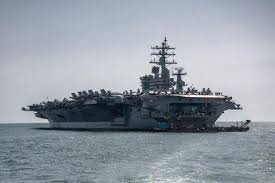
- Aircraft Carriers: The centerpiece of US naval power, capable of launching and recovering aircraft for a wide range of missions. The Gerald R. Ford-class carriers represent the latest generation of aircraft carrier technology.
- Submarines: Nuclear-powered submarines provide a stealthy and powerful platform for strategic deterrence, surveillance, and attack.
- Cruisers and Destroyers: These surface combatants provide air defense, anti-submarine warfare, and surface warfare capabilities.
- Amphibious Warfare Ships: Used to transport and land Marines for expeditionary operations.
- Naval Aviation: A diverse fleet of aircraft, including fighter jets, attack aircraft, helicopters, and surveillance planes.
The Navy is also heavily invested in developing cutting-edge technologies, such as unmanned systems, directed energy weapons, and advanced sensors. The [Office of Naval Research](https://www.onr.navy.mil/) is at the forefront of these innovations.
The Future of the US Navy
The US Navy faces evolving challenges in the 21st century, including the rise of new naval powers, the proliferation of advanced weapons, and the increasing threat of cyber warfare. The Navy is adapting to these challenges by focusing on modernization, innovation, and strengthening alliances. Future plans include expanding the fleet, developing new technologies, and enhancing its ability to operate in contested environments. The US Navy remains a critical component of US national security and a vital force for maintaining peace and stability around the world.