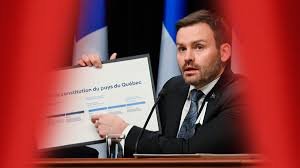
Charles Milliard’s Position on Bill 96 Sparks Controversy
The recent shift in position by Charles Milliard, leader of the Quebec Liberal Party (PLQ), regarding the renewal of the derogation clause in Bill 96 – Quebec’s law for the protection of the French language – has ignited debate within Quebec’s Anglophone community. Sylvia Martin-Laforge, Executive Director of TALQ (formerly the Quebec Community Groups Network), expressed her concerns to La Presse on Friday. “The right to judicial review is paramount in any democratic society. It’s a fundamental principle,” she stated.
On Thursday, during a press conference at the Parliament, Mr. Milliard announced his intention to renew the derogation clause within Bill 96, while also proposing modifications to the existing Caquist reform. This announcement has caused internal turmoil within his party, prompting an emergency caucus meeting as many Liberal members were unaware of this change in direction.
The Derogation Clause Explained
“I want to protect a large part of Bill 96, so I am in favour of that,” Mr. Milliard explained regarding the clause of derogation. This provision, also known as the parliamentary sovereignty clause, is a procedure outlined in the Canadian Constitution. It allows for the protection of a law against challenges based on certain articles of the rights and freedoms charters.
While the Liberals are unlikely to renew the derogation included in the Act respecting the laicity of the State (Bill 21), Mr. Milliard’s stance breaks from the promise made by former leader Dominique Anglade, who pledged to remove it from Bill 96 during the 2022 election campaign.
Reactions from the Anglophone Community
TALQ expressed surprise at Mr. Milliard’s position, especially considering the PLQ’s previous opposition to the preventative use of the derogation clause. Organizations within Quebec’s Anglophone community are already challenging aspects of Bill 96 in the courts, with these cases currently ongoing.
“We were surprised, [but] I understand that the rumour is that discussions are still ongoing within the PLQ [on this subject]. We have requested a meeting with the new Liberal leader,” as well as with the new Premier Christine Fréchette, Ms. Martin-Laforge added.
Other Political Developments
- Mark Carney & International Affairs: Prime Minister Mark Carney informed global leaders on Friday that Canada welcomed the reopening of the Strait of Hormuz and the ceasefire between Israel and Lebanon.
- Fréchette-Carney Meeting: Christine Fréchette met with federal counterpart Mark Carney in Ottawa on Friday, their first meeting since her swearing-in as Quebec’s Premier. Disagreements are already emerging regarding the federal government’s desire to regulate the derogation clause.
- Election Ballot Rejections: Élections Canada reports that the number of rejected ballots in the recent Terrebonne by-election was lower than in the last general election, despite the use of an adapted ballot.
- Carney’s Influence: Despite being named one of Time Magazine’s 100 most influential people in 2026, Pierre Poilievre criticized Mark Carney’s leadership at the Bank of Canada and the Bank of England following a difficult week for the Conservative Party.
- Political Alignment: Paul St-Pierre Plamondon argued that there are few differences between Christine Fréchette’s CAQ and Charles Milliard’s Liberals.
- Dr. Tremblay Joins PLQ: Well-known public health figure Dr. Cécile Tremblay will run for the Quebec Liberal Party (PLQ) in Sainte-Rose in the next election.
- Toll Roads Considered: The opposition is open to the implementation of toll roads in Quebec, as proposed by the Caquist government.
- Premier Fréchette’s Priorities: Premier Christine Fréchette will discuss immigration, cost of living, and infrastructure with Mark Carney during their meeting in Ottawa.
- Conservative Support for CAQ Constitution: The Quebec Conservative Party, now with one member in the National Assembly, is prepared to support the CAQ’s constitutional project, a condition set by Premier Fréchette for its adoption.
The political landscape in Quebec continues to evolve, with Bill 96 remaining a central point of contention. The coming weeks will be crucial in determining the future of this landmark legislation and its impact on the province’s linguistic and cultural identity.
Sources: La Presse