US Pilot Downed: A Blow to US Air Superiority Claims?
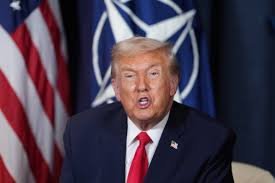
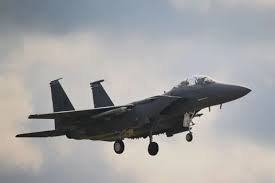
President Donald Trump previously asserted that Iran possessed no capacity to challenge American aircraft operating within its airspace, claiming its air defenses had been substantially weakened. Similarly, Defence Secretary Pete Hegseth stated the US had achieved “air superiority” over Iran. However, Friday’s downing of a US F-15 Eagle represents a significant setback for Washington D.C., suggesting Iran retains a degree of defensive capability, even if limited.
The Downed F-15 and the Search for the Pilot
The incident has triggered a frantic search-and-rescue operation, complicated by reports of Iranian fire directed at the rescue mission. While US media indicates the crew managed to escape Iranian airspace after sustaining injuries, the fate of the weapons systems officer remains uncertain. The BBC reports President Trump’s national security team dedicated much of Thursday to briefing him on the ongoing operation.
Publicly, President Trump has downplayed the event, suggesting it won’t derail negotiations with Tehran aimed at ending the conflict that began with US and Israeli strikes on February 28th. However, privately, the situation is likely causing considerable concern, particularly given reports that Iran’s Islamic Revolutionary Guard Corps (IRGC) has launched its own search for the missing American, offering a reward of approximately $66,000 (£50,000) for their capture – alive.
Historical Precedents and Potential Implications
The potential capture of the US service member carries profound implications. At a minimum, it would constitute a significant political embarrassment for Washington. The airman could be exploited for propaganda purposes, evoking unsettling memories of the 1979 Iran hostage crisis, where American diplomats were held captive for 444 days.
The US has a complex history of securing the release of detained citizens, sometimes through controversial means. For instance, the Obama administration exchanged five Taliban detainees held at Guantanamo Bay for US Army soldier Bowe Bergdahl in 2014, a move criticized for potentially incentivizing future hostage-taking. Council on Foreign Relations provides further insight into this event.
Escalation or Negotiation? A Delicate Balance
This situation presents President Trump with a difficult choice: escalate military action in response to the downing and potential capture, or pursue backchannel negotiations to secure the airman’s return. If captured and used as a bargaining chip, it would severely test Washington in this already volatile conflict.
Political Reactions and Growing Concerns
Lawmakers in Washington have expressed support and prayers, but divisions are emerging. Republican Congresswoman Nancy Mace called for bringing troops home, while Democratic Senator Tim Kaine urged Iran to adhere to international law regarding any captured airman. There’s growing apprehension about the risk to US personnel, particularly with discussions of a potential ground invasion. Across the political spectrum, there’s limited appetite for another protracted “forever war” or further American casualties.
President Trump has repeatedly issued deadlines for Iran to agree to a deal and reopen the Strait of Hormuz, threatening “hell” – including strikes on energy infrastructure – if demands aren’t met. Despite these threats, he continues to claim ongoing talks are “very good” and “productive,” assertions denied by Tehran.
Further Developments
Recent reports indicate the niece and grand-niece of Qasem Soleimani are in the custody of US Immigration and Customs Enforcement. Meanwhile, protests have erupted outside RAF Lakenheath, with over 100 demonstrators establishing a six-day peace camp. The rising cost of fuel, driven by the conflict, is also impacting global energy markets, prompting renewed discussions about energy independence in Europe. Reuters provides more information on this topic.
Copyright 2026 BBC. All rights reserved. The BBC is not responsible for the content of external sites. Read about our approach to external linking.