Iran War Hormuz: A Critical Juncture in Global Security
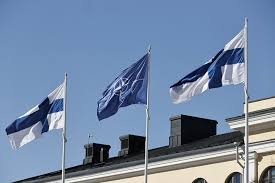
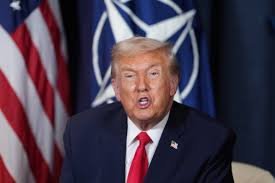
The situation in the Strait of Hormuz is rapidly evolving, with escalating tensions between the United States and Iran raising concerns about a potential war. U.S. President Donald Trump recently issued a warning to NATO allies, urging them to help secure the vital waterway or face a “very bad future” as a consequence of the ongoing conflict. This demand has sparked a complex debate about NATO’s role, the potential for escalation, and the broader implications for global security and the oil market.
Trump’s Demands and NATO’s Response
Trump’s call for assistance stems from concerns over Iran’s potential to disrupt oil shipments through the Strait of Hormuz, a critical chokepoint for global energy supplies. He argued that countries benefiting from the Strait should contribute to its security. However, the response from NATO allies has been mixed. While some nations have expressed willingness to consider ways to help, many have ruled out direct military involvement, at least for now.
Germany, Spain, and Italy have indicated they won’t participate in any Gulf mission. Britain and Denmark are considering options but emphasize the need for de-escalation. China remains noncommittal, while France has offered assistance “when circumstances permit.” Australia has stated it won’t send ships to the Strait of Hormuz.
The Ambiguity of NATO’s Article Five
A key point of contention is the applicability of Article Five of the NATO charter, which states that an attack against any member will be treated as an attack against all. Experts are divided on whether the current situation constitutes a trigger for Article Five, given the lack of a direct attack on a NATO member. The U.S. administration’s shifting rationale for its actions has further fueled this uncertainty.
Kevin Budning, director of scientific research at the CDA Institute, notes that the U.S. administration lacks a “clear coherent strategy” regarding the conflict. This lack of clarity has left allies hesitant to commit resources without a clear understanding of the objectives and potential risks.
Canada’s Position and Concerns
Canada, under Prime Minister Mark Carney and Defence Minister David McGuinty, has maintained a firm stance against participating in U.S.-led military operations in Iran. The Canadian government has emphasized that it was not consulted before the U.S. and Israel launched attacks against Iran and has no plans to participate in offensive actions. This position reflects a desire to avoid escalating the conflict and a focus on diplomatic solutions.
However, Canada’s relationship with the United States, particularly upcoming trade negotiations, adds a layer of complexity to its decision-making process. Aurel Braun, a professor of political science at the University of Toronto, suggests that Britain’s approach – allowing the U.S. to use its bases while avoiding direct involvement – is a “worst of both worlds” scenario, potentially compromising its principles.
The Wider Implications and Potential for Escalation
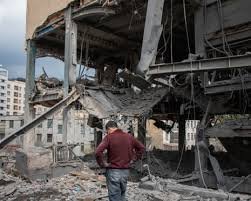
The situation is further complicated by Iranian strikes on targets in the region, including facilities in Turkey, the UAE, Kuwait, and Iraq, which host forces from NATO member states. These attacks raise the possibility of the conflict being drawn directly into NATO’s sphere of influence.
Joseph Varner, a senior fellow with the McDonald-Laurier Institute, points out that “the fact of the matter is that this has been dragged to the doorstep of NATO.” The potential for Iran to develop nuclear weapons and increase the range of its missiles poses a long-term threat to NATO, shipping lanes, and the global economy.
Looking Ahead
The coming weeks will be crucial in determining the trajectory of the conflict. De-escalation through diplomatic channels remains the most desirable outcome. However, the risk of miscalculation and further escalation remains high. The international community must work together to find a peaceful resolution that addresses the underlying tensions and ensures the security of the Strait of Hormuz.
For more information on the geopolitical landscape, consider exploring resources from The Council on Foreign Relations and Chatham House.