A 2,000-Year-Old Coin’s Unexpected Journey
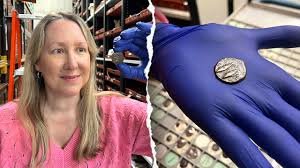
In a remarkable twist of fate, a 2,000-year-old coin, originating from the ancient Carthaginian empire, was unknowingly used as bus fare in England. The artifact, traced back to what is now Cadiz, Spain, has been generously donated to Leeds Museums and Galleries, as announced in a March statement from the City of Leeds.
Carthage, a powerful civilization flourishing in North Africa from approximately 800 B.C. to 146 B.C., left behind a legacy of trade and culture. This particular coin dates back to the first century B.C., offering a tangible link to a bygone era.
From Fare Collection to Historical Treasure
The story of this ancient coin is as fascinating as its history. It was originally collected in the 1950s by James Edwards, a dedicated employee of Leeds City Transport. As part of his daily routine, Edwards tallied fares from bus and tram drivers, setting aside any unusual currency – foreign or counterfeit – for further examination. He took these coins home, sparking a family fascination.
Edwards passed the coin down to his grandson, Peter, who stored it in a wooden chest for decades. Recently, at the age of 77, Peter revisited the artifact and embarked on a journey to uncover its origins.
“Neither of us were coin collectors, but we were fascinated by their origin and imagery — to me, they were treasure,” Peter Edwards shared. “The coin always fascinated me because it was hard to decipher where it came from.”
Unveiling the Carthaginian Legacy
Peter Edwards ultimately donated the coin to the Leeds Discovery Center, a free museum boasting a diverse collection of “coins and currency from cultures around the world spanning thousands of years of history.”
While the exact path the coin took to reach Leeds remains a mystery, officials speculate it may have been brought by a soldier returning home. Similar coins have been discovered before, allowing experts to cross-reference and confirm its authenticity. The coin features the image of Melqart, the Phoenician equivalent of Hercules, and reflects the practice of incorporating Greek imagery to appeal to traders.
“At that time, some Phoenician coins carried Greek imagery to make them more appealing to traders,” Leeds City Council explained in a statement.
Edwards expressed his grandfather’s pride in knowing the coin would find a home in a museum, stating, “However, how it got there will always be a mystery.”
Learn more about ancient civilizations: World History Encyclopedia – Carthage