Helen Hunt Jackson’s Pivotal Visit to Rancho Camulos
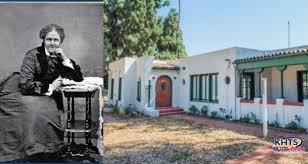
Though her stay lasted only a few hours on January 23rd, 1882, Helen Hunt Jackson’s visit to Rancho Camulos played a crucial role in shaping her most famous work, the 1884 novel Ramona. This visit wasn’t merely a stop on a journey; it was a deep dive into the heart of California’s history and culture, providing the authentic backdrop for a story that would resonate across the nation.
Rancho Camulos: A Flourishing Estate
At the time of Jackson’s visit, Rancho Camulos was a thriving agricultural estate nestled along the Santa Clara River. The rancho bustled with life – vineyards, citrus groves, and walnut orchards flourished, wine was pressed on-site, and expansive herds of sheep and cattle roamed the land. It was a family home, long inhabited by Don Ignacio del Valle and his wife, Doña Ysabel Varela del Valle, who raised eleven children and welcomed numerous orphans into their household.
Stories Within the Walls
Among the residents was Blanca Yndart, an orphan whose story held a particular fascination. Blanca was the granddaughter of a sea captain who left her a chest of jewels to be opened on her 21st birthday – a tale that would later find echoes within the pages of Ramona. Just two years prior, Don Ignacio del Valle had passed away and was laid to rest on the property, leaving the estate to his son, Reginaldo del Valle, who was serving as a California state senator.
A Mission to Expose Injustice
Jackson arrived at Rancho Camulos as part of a larger mission: to expose the injustices faced by Native Americans in the American West. Her previous nonfiction work, A Century of Dishonor, meticulously documented broken treaties and governmental failures. However, Jackson believed a novel – one with the emotional impact of Uncle Tom’s Cabin – was needed to reach a wider audience and truly ignite change. She traveled throughout Southern California, seeking authentic locations and personal narratives to ground her story in reality. You can learn more about the history of Native American rights at The Bureau of Indian Affairs.
The Birth of ‘Ramona’
During her visit, Jackson interviewed ranch workers and residents, including Blanca Yndart, meticulously recording details about daily life at Camulos. Though Doña Ysabel was away, her strong presence and reputation profoundly influenced Jackson’s portrayal of the dignified Señora Moreno in Ramona. Canadian artist Henry Sandham also spent a week at the rancho, creating sketches that would accompany the romantic tale.
Published in 1884, Ramona became a cultural phenomenon, solidifying Rancho Camulos’ identity as the novel’s primary setting. The book even caught the eye of D.W. Griffith, who considered it ideal material for early filmmaking, leading to multiple film adaptations.
Experiencing Rancho Camulos Today
Ramona tells the story of the titular character, a mixed-race orphan navigating life in post-Mexican-American War California. Today, visitors can experience the historic surroundings of Rancho Camulos, now a 40-acre National Historic Landmark located just 10 miles west of Santa Clarita. Each January, the Rancho Camulos Museum hosts an annual “return” of Helen Hunt Jackson, featuring reenactments and guided tours. The nearby Mountain View Inn in Piru, a Victorian-style hotel, also offers a taste of California history.
Rancho Camulos stands as a testament to a pivotal moment in literary and California history, forever linked to the inspiring visit of Helen Hunt Jackson.