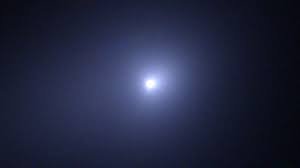
Interstellar Comet 3I/ATLAS: A Window into Other Worlds
Breaking space news! The interstellar comet 3I/ATLAS is captivating scientists with its unique journey through our solar system. This remarkable object, only the third ever discovered originating from beyond our sun, offers an unprecedented opportunity to study the building blocks of planets in distant star systems.
A Comet From Another Star
3I/ATLAS is particularly intriguing because it originated around another star, providing a glimpse into the raw materials that existed in other stellar nurseries as planets, asteroids, and comets were forming. This allows for a direct comparison with comets born within our own solar system, helping us understand the diversity of planetary formation processes.
Unlocking Chemical Secrets
Recent research, utilizing the Subaru Telescope in Hawaii, has revealed that the comet’s chemistry was changing as it made its closest approach to the sun in October 2025. Researchers, led by Yoshiharu Shinnaka of the Koyama Space Science Institute in Japan, observed the comet’s coma – the bubble of gas surrounding it – and estimated the ratio of carbon dioxide to water.
The team discovered that this ratio had shifted since the comet’s perihelion (closest approach to the sun). This change isn’t just about evolving chemistry; it also hints at the comet’s internal structure. As the comet nears the sun, solar radiation causes ice to sublimate – transforming directly from solid to gas – releasing gases from its frozen core. The observed changes suggest a difference between the comet’s internal and external composition.
“By applying the observational and analytical techniques we have developed through studies of solar system comets to interstellar objects, we can now directly compare comets hailing from both inside and outside the solar system and explore differences in their composition and evolution,” explained Shinnaka in a statement.
The Future of Interstellar Object Research
With the advent of more powerful survey telescopes, scientists anticipate discovering many more interstellar objects in the coming years. These discoveries will be crucial in furthering our understanding of planetesimal and planet formation across a wide range of stellar systems, including our own. As Shinnaka notes, “Through studies of such objects, we hope to gain a deeper understanding of how planetesimals and planets formed in a wide variety of stellar systems, including our own solar system.”
The team’s research is scheduled to be published in the Astronomical Journal on April 22nd, with a pre-print version available on arXiv.
Stay updated with the latest space news! Sign up for our newsletters to receive daily updates on rocket launches, skywatching events, and more.