USS Dwight D. Eisenhower: A Symbol of American Naval Power
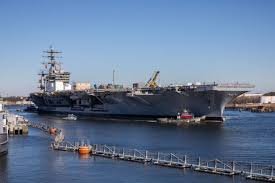
The USS Dwight D. Eisenhower (CVN-69), affectionately known as “Ike,” is one of the United States Navy’s ten Nimitz-class supercarriers. Commissioned in 1977, this formidable vessel has served as a cornerstone of American naval power for over four decades, participating in numerous critical operations and projecting American influence across the globe. Its namesake, the 34th President of the United States and Supreme Commander of the Allied Expeditionary Force during World War II, reflects the ship’s commitment to leadership and defense.
A History of Service and Deployment
From its initial deployment in 1979, the USS Eisenhower has been consistently deployed to key strategic regions. It played a significant role during the 1980s, participating in exercises in the Mediterranean Sea and the Indian Ocean, demonstrating a commitment to regional stability. Following the September 11th attacks, Ike was heavily involved in Operation Enduring Freedom and Operation Iraqi Freedom, providing crucial air support and maintaining a strong presence in the Persian Gulf. More recently, the ship has been instrumental in countering piracy and maintaining freedom of navigation in vital sea lanes.
Technical Specifications and Capabilities
The USS Dwight D. Eisenhower is a marvel of engineering. Here’s a glimpse into its impressive specifications:
- Displacement: Approximately 97,000 long tons
- Length: 1,092 feet (333 m)
- Beam: 252 feet (77 m)
- Draft: 36 feet (11 m)
- Propulsion: Two nuclear reactors, four steam turbines
- Speed: Over 30 knots (56 km/h; 35 mph)
- Aircraft Capacity: Approximately 90 aircraft (fighters, attack aircraft, helicopters, and support aircraft)
The ship’s nuclear propulsion allows for virtually unlimited range and endurance, eliminating the need for frequent refueling. Its advanced radar systems, including the AN/SPY-1, provide unparalleled situational awareness, while its robust defensive systems protect it from a variety of threats. The Eisenhower is essentially a floating airfield, capable of launching and recovering aircraft around the clock.
Modernization and Future Outlook
The USS Eisenhower has undergone several significant modernization upgrades throughout its service life, ensuring it remains at the forefront of naval technology. These upgrades include improvements to its radar systems, electronic warfare capabilities, and aircraft handling equipment. Currently, the ship is undergoing a Refueling Complex Overhaul (RCOH) at Newport News Shipbuilding, a process that will extend its service life for another 25 years. This extensive overhaul involves refueling the ship’s nuclear reactors, as well as upgrading numerous systems and components. The future of the USS Dwight D. Eisenhower remains bright, and it will continue to serve as a vital asset for the US Navy for decades to come. You can find more information about US Navy aircraft carriers at the official Navy website.
The Human Element
Beyond the impressive technology, the USS Eisenhower is powered by the dedication and skill of its crew – approximately 5,000 sailors. These men and women work tirelessly to maintain the ship’s operational readiness and carry out its mission. Life aboard an aircraft carrier is demanding, but it fosters a strong sense of camaraderie and purpose. The crew of the USS Eisenhower represents the best of the US Navy and embodies the values of service, honor, and courage.