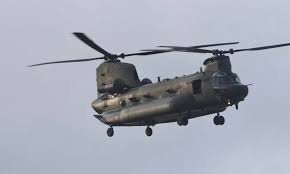
Chinook Helicopter: A Deep Dive into the CH-47
The Boeing CH-47 Chinook is arguably one of the most recognizable and vital heavy-lift helicopters in the world. For over six decades, it has served as a workhorse for militaries across the globe, proving its reliability and versatility in a wide range of missions. This article provides a comprehensive overview of the Chinook helicopter, covering its history, capabilities, specifications, and ongoing evolution.
A History of Heavy Lifting: The Chinook’s Origins
The story of the Chinook began in the early 1960s, when the U.S. Army sought a replacement for the aging CH-37 Mojave and CH-54 Tarhe. Boeing Vertol (later Boeing Helicopters) won the competition with its Model 114, which was subsequently designated the CH-47A Chinook. The first Chinook flew in 1961, and quickly demonstrated its ability to transport heavy loads to remote locations – a critical capability during the Vietnam War.
Key Capabilities and Missions
The CH-47 Chinook isn’t just about lifting heavy objects. Its versatility allows it to perform a diverse array of missions, including:
- Troop Transport: Capable of carrying up to 55 soldiers.
- Cargo Transport: Lifting internal and external loads exceeding 20,000 pounds.
- Medical Evacuation (MEDEVAC): Providing rapid transport for wounded personnel.
- Disaster Relief: Delivering essential supplies and personnel to affected areas.
- Search and Rescue (SAR): Assisting in locating and rescuing individuals in distress.
- Special Operations: Supporting covert missions with specialized configurations.
The Chinook’s tandem rotor design – with two large rotors mounted one behind the other – provides exceptional lifting capacity and stability, even in challenging conditions. This unique configuration eliminates the need for a tail rotor, increasing efficiency and reducing noise.
Technical Specifications: What Makes the Chinook Tick?
Here’s a look at some key specifications of the CH-47F Chinook (the latest production model):
- Length: 73 ft 3 in (22.3 m)
- Rotor Diameter: 69 ft 4 in (21.1 m)
- Height: 18 ft 6 in (5.64 m)
- Empty Weight: 22,285 lb (10,098 kg)
- Max Takeoff Weight: 50,000 lb (22,680 kg)
- Cruise Speed: 162 mph (261 km/h)
- Range: 450 miles (724 km)
- Engines: Two Honeywell T55-GA-714A turboshaft engines
Modernization and Future Developments
The Chinook has undergone continuous modernization throughout its service life. The CH-47F model incorporates advanced avionics, including a fully integrated digital cockpit, improved cargo hook capabilities, and enhanced situational awareness systems. Boeing is currently developing the CH-47G Chinook, which will feature further upgrades to its engines, rotors, and avionics, ensuring the Chinook remains a relevant and capable platform for decades to come. You can find more information about the latest developments on Boeing’s official Chinook page.
Global Operators and Impact
Beyond the United States, the Chinook is operated by numerous countries worldwide, including:
- Canada
- United Kingdom
- Italy
- Australia
- Netherlands
- Spain
- Japan
Its adaptability and proven performance have made it an indispensable asset for military forces around the globe. The Chinook continues to play a crucial role in peacekeeping operations, humanitarian aid missions, and combat deployments.
Conclusion
The Boeing CH-47 Chinook is a testament to engineering excellence and a symbol of heavy-lift capability. Its enduring legacy and ongoing modernization ensure that it will continue to serve as a vital asset for militaries worldwide for years to come. For further reading on military aviation, explore resources like Airforce Technology.