NASA Artemis II Moon Mission: A New Era of Lunar Exploration
NASA has unveiled the first high-resolution images of Earth captured by the Artemis II crew as they embark on their groundbreaking journey around the Moon. Commander Reid Wiseman captured these “spectacular” images following a crucial engine burn that propelled the Orion spacecraft towards our celestial neighbour. This mission marks the first time humans have ventured beyond Earth’s orbit since 1972, reigniting the spirit of lunar exploration.
“Hello, World”: A Breathtaking View of Our Planet
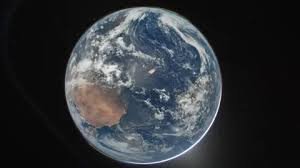
The first image, aptly named “Hello, World,” presents a stunning vista of the Atlantic Ocean, framed by the Earth’s atmospheric glow during a solar eclipse. Vibrant green auroras dance at both poles, adding to the image’s ethereal beauty. The perspective is unique – Earth appears upside down, showcasing the western Sahara, the Iberian Peninsula, and the eastern portion of South America. Notably, Venus shines brightly in the lower right corner of the frame.
These images were taken shortly after the successful completion of a trans-lunar injection burn, which transitioned the Orion spacecraft from Earth orbit. The four astronauts aboard are now travelling over 200,000 miles towards the Moon, following a looping path that will take them around the far side and back.
A Crew Captivated by the View
Mission specialist Jeremy Hansen reported that the crew was “glued to the windows” after the burn, eagerly capturing the awe-inspiring views. “We are getting a beautiful view of the dark side of the Earth, lit by the Moon,” he communicated to mission control in Houston. Commander Wiseman even inquired about window cleaning procedures, a testament to the crew’s enthusiasm for observing the cosmos.
Initially, Wiseman faced challenges adjusting exposure settings for photographing Earth from such a distance, comparing the experience to photographing the Moon from home. However, he quickly overcame this hurdle, capturing further stunning images.
Earth as Seen From Space: A Striking Contrast
Another image captured by Wiseman showcases the dramatic division between day and night, known as the terminator. NASA also released an image of Earth in near-complete darkness, revealing the twinkling lights of human civilization. A compelling side-by-side comparison was presented, juxtaposing a 2026 view of Earth with a similar image taken by the Apollo 17 crew in 1972 – the last time humans walked on the Moon. NASA remarked, “We’ve come so far in the last 54 years, but one thing hasn’t changed: our home looks gorgeous from space!”
Looking Ahead: Towards a 2028 Lunar Landing
While the Artemis II mission does not involve a lunar landing, it is a crucial step in NASA’s preparations for a potential landing by 2028. The United States aims to be the first country to return humans to the lunar surface, and this mission is paving the way for that historic achievement. The Artemis program represents a significant investment in space exploration and a renewed commitment to understanding our universe. You can learn more about the Artemis program on the NASA website.
This mission is being tracked by stations around the world, including one in Cornwall, highlighting the global collaboration involved in space exploration.
Copyright 2026 BBC. All rights reserved. The BBC is not responsible for the content of external sites.