Artemis 2 Launch Date: Humanity’s Return to Lunar Proximity
The world is eagerly anticipating the launch of Artemis II, a monumental mission poised to send four astronauts on a groundbreaking journey around the moon. Currently slated for a launch as early as April 1, this mission marks the first time humans will venture into deep space and orbit the moon in over half a century – a truly historic event that transcends a typical rocket launch.
A Crewed First: SLS and Orion Take Flight
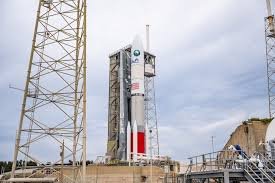
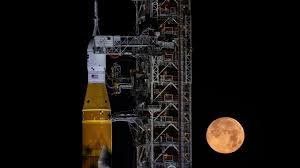
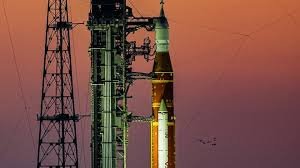
When Artemis II clears the launch tower at Kennedy Space Center’s Pad 39B, it will be a watershed moment. The Space Launch System (SLS) rocket and the Orion spacecraft will carry a human crew for the very first time. This mission represents a significant leap forward in space exploration, building upon the success of the uncrewed Artemis I mission. The SLS, powered by liquid hydrogen and liquid oxygen, along with its two solid rocket boosters, will generate a staggering 8.8 million pounds of thrust at liftoff, propelling the spacecraft to a velocity of 25,000 miles per hour on its 600,000-mile journey.
Meet the Artemis II Crew
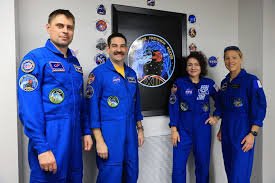
The courageous crew of Artemis II includes NASA astronauts Reid Wiseman, Victor Glover, and Christina Koch, alongside Canadian astronaut Jeremy Hansen. These highly trained individuals will be at the forefront of this daring mission, pushing the boundaries of human spaceflight.
Safety First: Addressing Potential Risks
NASA has meticulously assessed potential risks associated with the Artemis II mission. John Honeycutt, manager of NASA’s SLS Program, stated during a Flight Readiness Review on March 12th, “We didn’t find any new integrated risks.” However, acknowledging the inherent uncertainties of a crewed mission, Honeycutt admitted that surprises are always possible. The most critical phases of the mission, from liftoff through achieving a high Earth orbit and the subsequent trajectory towards the moon, require the utmost vigilance.
Emergency Protocols: Ensuring Crew Safety
NASA has developed comprehensive emergency protocols to safeguard the Artemis II crew. These include:
- Emergency Egress System: In the event of an issue before the final countdown, astronauts can utilize a 1,335 ft cable system to quickly descend from the launch pad in armored baskets.
- Launch Abort System (LAS): Mounted atop the Orion spacecraft, the LAS can rapidly pull the capsule away from the SLS rocket during an emergency, ensuring a safe parachute landing. Lockheed Martin highlights the LAS as a crucial safety feature, providing peace of mind to astronauts and mission teams.
- Interim Cryogenic Propulsion Stage (ICPS) Contingency: Should issues arise with the ICPS burn, the mission can be adjusted to remain in low Earth orbit and prepare for reentry.
- Free-Return Trajectory: If problems occur during the lunar flyby, the spacecraft will utilize a “free-return trajectory,” leveraging the gravity of Earth and the moon to guide it back home.
Mission Timeline: From Earth Orbit to Lunar Flyby
Following launch, the Interim Cryogenic Propulsion Stage (ICPS) will propel Orion into a high Earth orbit. The crew will then test the spacecraft’s handling capabilities before making the critical decision to embark on a translunar injection – the maneuver that will send them towards the moon. Once past this point, the return trip to Earth becomes increasingly time-sensitive.
Awaiting a Safe Return
Even after a successful lunar flyby, NASA will remain vigilant until Orion and its crew are safely recovered from the Pacific Ocean. As John Honeycutt emphasized, “We’re not going to celebrate until we get Reid and Victor and Christina and Jeremey safely home.” The Artemis II mission represents not only a technological achievement but also a testament to the dedication and unwavering commitment to safety that defines NASA’s pursuit of space exploration. You can find more information about the mission on the official NASA Artemis II website.