Mac McClung’s Hometown: A Legacy of Courage and Integration in Norton, Virginia
Norton, Virginia, a small coalfield city, holds a remarkable story that extends far beyond the realm of baseball. It’s a narrative of bravery, quiet defiance, and a group of children and adults who dared to challenge segregation in the early 1950s. While the name Mac McClung is currently making waves in the basketball world, his hometown carries a history of breaking barriers.
A Little League Team That Changed History
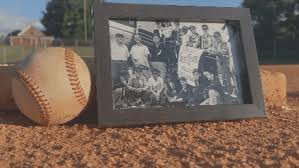
In 1951, as Virginia was deeply entrenched in Jim Crow laws and bracing for its period of “massive resistance” to desegregation, the Norton Little League team made a decision that would resonate far beyond the baseball diamond. As Bill Kanto, an alternate on the 1951 Norton Little League All-Star team, recalls, “At the time, we were in a segregated society. There was even a law that Black and white couldn’t play on the same field together.”
But for the young boys who gathered for tryouts that summer, the allure of baseball transcended racial boundaries. Norman Payne, a team member, simply stated, “We wanted to play baseball. It didn’t matter what color we was – we were here to play baseball.”
An Open Invitation and Unexpected Participation
The opportunity arose from a simple advertisement in the local newspaper, the Coalfield Progress, seeking players. This notice reached communities throughout Norton, including African American neighborhoods. Robert Raines, another All-Star, remembers, “When they advertised to have the tryouts, it was sent to Coalfield Progress. We had over 100 boys that showed up and it’s my understanding that we had two Black boys show up.”
These two young players became pivotal figures in a quiet, yet significant, stand against segregation. Dr. Charles Linton, a leader within the league, made a groundbreaking decision that defied both societal norms and the law. Raines recounts, “He said, ‘Go find two of your buddies, and we’ll put one of you on each team.’”
Courage and Trust in a Segregated Society
For the Black players and their families, participating required immense courage and unwavering trust. Kanto explains, “The Black kids had to have a lot of courage to come across the railroad tracks and decide to try. And the families had to trust that their kids wouldn’t be taken advantage of.”
While the children focused on the game, adults recognized the broader implications. Full desegregation was still over a decade away in 1951. Yet, Norton’s Little League was quietly integrating.
Facing Opposition and Standing Firm
The defining moment arrived when the Norton All-Stars advanced to the Virginia state championship. State officials immediately objected to the integrated roster. Kanto recalls, “The powers that be said, ‘Well, you can’t play if you’ve got Black players.’”
However, Linton and the team’s coaches refused to yield. Kanto continues, “To his credit, Dr. Linton said, ‘They’re on our team and they’re going to play. If you don’t play them, you can’t be the state champ.’”
After tense negotiations, a compromise was reached: a single championship game would be played in Norton, allowing the integrated team to compete. Norton emerged victorious, but the win signified far more than a championship title. It represented a rare and early challenge to segregation in organized youth sports in Virginia – driven not by legal mandates or political pressure, but by children and the adults who supported them.
A Lasting Legacy
“They stood firm. They did not back down,” Kanto emphasizes. “It was their principle.” Decades later, the significance of this moment continues to resonate with those who experienced it. Payne reflects, “I think about it every so often. It’s wonderful that they had the courage and the knowledge to do this.”
Today, a historical marker in Norton serves as a powerful reminder that change can originate in the most unexpected places – even on a humble Little League field – where a group of boys simply wanted to play ball, and in doing so, helped to shape history. This story, rooted in Mac McClung’s hometown, is a testament to the power of unity and the courage to challenge injustice.
Learn more about the history of segregation and the Civil Rights Movement at The NAACP.