NASA’s Artemis Missions: A New Chapter in Lunar Exploration
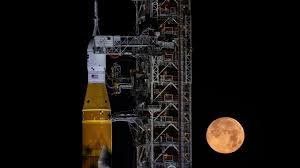
As NASA’s Artemis II mission prepares for its 10-day journey around the moon, the crew stands poised to witness lunar features unseen by human eyes. This historic flight, anticipated to launch as early as March, marks humanity’s return to lunar vicinity after over 50 years, igniting a new wave of exploration with the potential to answer long-standing questions about Earth’s celestial companion.
The Far Side’s Secrets
The Artemis II astronauts will have a unique vantage point, observing the mysterious lunar far side – a region perpetually hidden from Earth. Unlike the Apollo missions, limited by orbital constraints, Artemis II will offer a broader view, revealing details previously inaccessible. This mission is a crucial step in understanding the moon’s complex history and composition.
What We Still Don’t Know About the Moon
Despite decades of lunar study, significant mysteries remain. “We’ve been looking at the moon throughout human history, and the moon has been visited by astronauts and a number of robotic missions,” explains Jeff Andrews-Hanna, a professor at the University of Arizona. “Yet there’s still so many things we don’t understand about the moon on a very first order level.”
Building on Apollo’s Legacy
The Apollo missions laid the groundwork for our current understanding, providing invaluable lunar rocks and soil samples. These samples revealed insights into the moon’s origin and, surprisingly, the presence of water trapped within seemingly dry rocks. However, Apollo’s focus on the near side and equatorial regions meant the samples weren’t fully representative of the moon’s diversity.
Artemis: A Comprehensive Lunar Portrait
The Artemis program aims to rectify this by exploring diverse lunar regions. This will provide a more complete picture of the landscape, composition, and the reasons behind the stark differences between the near and far sides. Scientists hope to determine the amount of water present and trace the moon’s evolution over billions of years.
Unlocking Earth’s History
Studying the moon isn’t just about understanding our satellite; it’s about understanding Earth’s past. “I think of the moon as the eighth continent of Earth,” says Noah Petro, chief of NASA’s Planetary, Geology, Geophysics and Geochemistry Laboratory. “When we study the moon, we’re actually really studying an extension of the Earth.” The prevailing theory suggests the moon formed from a colossal impact between Earth and another celestial body, and lunar research could confirm or refute this.
The Promise of the Unexpected
The spirit of exploration hinges on the unknown. “We will have surprises,” predicts Petro, who leads the science team for Artemis III, aiming to return astronauts to the lunar surface in 2028. “That’s why we explore. If we knew what we would find, we wouldn’t have to go.” Bringing back lunar samples is paramount, as rocks record the history of their formation.
The South Pole: A Prime Target
Future Artemis missions will focus on the lunar south pole, a region believed to hold clues to the moon’s early history and potentially significant amounts of water ice. Samples from this area, blasted from the lunar interior billions of years ago, could unlock a new chapter in lunar science. Seismometers will also be deployed to study moonquakes and map the moon’s interior structure.
From Moon to Mars
Artemis isn’t just about the moon; it’s a stepping stone to Mars. The technology and infrastructure developed for long-duration lunar missions will be crucial for future crewed missions to the Red Planet. Understanding Earth, the moon, and Mars provides a comprehensive understanding of planetary evolution. As Petro eloquently states, “The moon is the best place to start making those discoveries.”
Learn more about NASA’s Artemis program on the official NASA website.