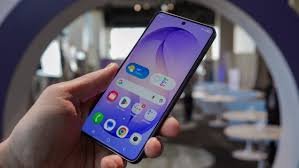
iPhone 17, Galaxy S26 & Pixel 10: The Ultimate Smartphone Showdown
Samsung’s Galaxy S26 lineup boasts cutting-edge hardware and bold new features, but Google’s Pixel 10 counters with competitive pricing and intelligent software—making this a truly exciting battle for smartphone supremacy. While the iPhone 17 is still on the horizon, the Android competition is already heating up. Let’s dive into a detailed comparison to see which flagship Android lineup is shaping up to lead the pack.
Bottom Line: Galaxy S26
The Galaxy S26 line offers cutting-edge display technology (including Privacy Display on the Ultra), robust camera systems, and long-term software support—at a premium price point. It’s a powerhouse for those who demand the best, but it comes at a cost.
Bottom Line: Pixel 10
The Pixel 10 line emphasizes smart, AI-powered features, a clean software experience with the fastest updates, and strong camera performance—all at a more competitive price than Samsung. It’s the smart choice for value-conscious consumers.
The Contenders: Samsung vs. Google
Samsung and Google are once again locked in a head-to-head battle in the flagship Android arena. With the all-new Galaxy S26 lineup officially unveiled, Samsung is directly challenging Google’s Pixel 10 family. We’ve already thoroughly tested the Pixel 10 series, analyzing its performance, software enhancements, and camera quality. While the Galaxy S26 phones haven’t yet arrived for full testing, we’ve had hands-on time and have a solid first impression of what they offer. So, while we await lab results, let’s explore the specs, features, and early impressions to determine which flagship Android lineup is poised to take the lead.
Price Comparison
There are a total of six phones between these two lineups, not counting the Pixel 10a. The S26 starts at $899.99, the S26+ starts at $1,099.99, and the S26 Ultra starts at $1,299.99. All three come with at least 256GB of storage, with higher capacities available at an additional cost. Meanwhile, the Pixel 10 starts at $799, the Pixel 10 Pro starts at $999, and the Pixel 10 Pro XL starts at $1,119. The base models of the Pixel 10 and 10 Pro come with 128GB of storage, with 256GB variants costing $100 more, aligning their prices with the Galaxy S26 and S26+. The most expensive S26 is the S26 Ultra, with 1TB of storage, priced at $1,799.99. A 1TB Google Pixel 10 Pro costs $1,449, while a Pro XL is $1,549. Technically, the Pixel 10 series offers a more affordable entry point than the Galaxy S26 lineup.
Design and Build Quality
Samsung and Google have distinct design languages. From the front, both phones present as rounded rectangular slabs. The Galaxy S26 measures 5.89 x 2.82 x 0.28 inches (HWD) and weighs 5.89 ounces; the 6.7-inch Galaxy S26+ is 6.24 x 2.98 x 0.29 inches and weighs 6.70 ounces; and the Galaxy S26 Ultra is 6.44 x 3.07 x 0.31 inches and weighs 7.55 ounces. The Pixel 10 is 6.02 x 2.83 x 0.34 inches and 7.20 ounces. The Pixel 10 Pro shares the same dimensions as the 10, but weighs 7.30 ounces. The Pixel 10 Pro XL is a larger phone at 6.41 x 3.02 x 0.33 inches and 8.18 ounces. The Samsung series is generally thinner and lighter than its Pixel counterparts. All phones are IP68 rated for dust and water resistance and feature aluminum frames. Samsung uses Corning Gorilla Glass Armor on the S26 and S26+ screens, while the S26 Ultra gets Gorilla Armor 2. Google utilizes Corning Gorilla Glass Victus 2 across all Pixel 10s. The back of each Samsung S26 features three cameras in a vertical pill-shaped riser, with the S26 Ultra adding two rounded sensors to the right. The Pixel series features Google’s signature Camera Bar, an oblong camera bump that spans the back panel. Color options for the Galaxy S26 include Black, Cobalt Violet, Sky Blue, or White, with Silver Shadow and Pink Gold available online. The Pixel 10 comes in Frost, Indigo, Lemongrass, or Obsidian, while the Pro models offer Jade, Moonstone, Obsidian, or Porcelain. Style is subjective, so choose the design that appeals to you.
Display Quality
Refer to the comparison chart for detailed specifications, but the Pixel 10 series generally boasts higher maximum brightness, while the S26 Ultra features the largest screen at 6.9 inches. Regardless of your choice, you’ll enjoy crisp details and smooth animations. Notably, the Pixel 10 is the only device here that doesn’t support a 1-120Hz refresh rate, which could potentially impact battery life. Samsung’s Galaxy S26 Ultra introduces Privacy Display, a novel feature that narrows the viewing angle to prevent shoulder surfing. This technology can also obscure the screen on an app-by-app basis or on specific screen portions, like notifications. This innovation gives the S26 a clear advantage.
Performance and Processing Power
Every Galaxy S26 model is powered by a customized Qualcomm Snapdragon 8 Elite Gen 5 for Galaxy, a chip not found in other devices. All models offer at least 12GB of RAM, with the 1TB S26 Ultra boasting 16GB. The Pixel 10 series utilizes Google’s Tensor G5 processor, custom-built for AI applications. We expect the S26 series to perform exceptionally well, potentially mirroring the RedMagic 11 Pro gaming phone, which also uses the Snapdragon 8 Elite Gen 5. The Pixel 10’s performance is a significant improvement over the Pixel 9 series.
Camera Capabilities
The Galaxy S26 and S26+ retain the hardware from their predecessors: a 50MP main shooter, a 12MP ultra-wide lens, and a 10MP telephoto camera with 3x optical zoom. The S26 Ultra features a 200MP main camera, a 50MP ultra-wide lens, a 50MP telephoto lens with 5x optical zoom, and a 10MP telephoto camera with 3x optical zoom. All Galaxy S26 devices use a 12MP front-facing camera. The Pixel 10 has a 48MP main camera, a 13MP ultra-wide sensor, and a 10.8MP telephoto camera with 5x optical zoom. For selfies, the Pixel 10 has a 10.5MP camera, while the Pros boast a 42MP sensor. For video recording, all Galaxy S26s shoot up to 8K at 30fps, while the Pixel 10 series captures up to 4K at 60fps. Pixel 10 Pro models can produce 8K video at 30fps through post-processing.
Battery Life and Charging
All phones offer at least 25W wired and 15W wireless charging, with rates increasing with price. The Pixel 10 series supports Google’s PixelSnap magnetic charging technology, while the S26 series lacks built-in magnets. Full battery tests are pending.
Software Experience
Both sets of phones run Android 16, with Samsung adding its One UI layer. Both offer a wealth of AI tools, including prompt-based image editing, voice transcription, and summarization. Samsung and Google are software partners, and the S26 features an advanced version of Circle to Search. Both companies provide seven years of OS and privacy updates. If you prioritize multitasking, Samsung’s One UI might be preferable. Alternatively, Google’s Magic Cue, a proactive assistant, could be more appealing. For the fastest updates, the Pixel series receives new Android features first. The Galaxy S26 supports DeX, enabling a desktop-like experience with a monitor and keyboard, a feature not yet officially available on the Pixel 10.
Other Considerations
The Galaxy S26 Ultra is the only device with a stylus, the included S Pen. The S26 phones support both physical SIM cards and eSIM, while the Pixel 10 is eSIM-only. For 5G, all Pixel 10s, the S26+, and S26 Ultra support both sub-6GHz and mmWave, while the S26 supports sub-6GHz only.
Final Thoughts
Without comprehensive testing of the S26 series, definitive buying advice is premature. However, if you value multitasking or a desktop-like experience, the Galaxy S26 is a strong contender. If you prioritize receiving the latest Android features immediately, the Pixel is the way to go. If magnetic charging is a must-have, the Pixel 10 series has you covered. Stay tuned for our full reviews of the Galaxy S26 lineup for a conclusive verdict.