## NASA Ignites a New Era of Space Exploration
During its “Ignition” event, NASA unveiled a series of ambitious initiatives designed to propel American leadership in space, aligning with President Trump’s National Space Policy. These actions aren’t just about reaching for the stars; they represent a critical moment for scientific discovery and innovation.
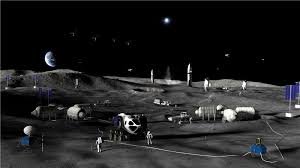
“NASA is committed to achieving the near-impossible once again, to return to the Moon before the end of President Trump’s term, build a Moon base, establish an enduring presence, and do the other things needed to ensure American leadership in space,” stated NASA Administrator Jared Isaacman. “The clock is running in this great-power competition, and success or failure will be measured in months, not years.”
### A Focused Approach to Lunar Exploration
NASA is shifting towards a phased, focused architecture for lunar missions, building capabilities incrementally with the support of industrial and international partners. This includes standardizing the Space Launch System (SLS) rocket configuration and planning for at least one surface landing each year, beginning in 2027 with Artemis III.
Looking ahead, NASA will incorporate more commercially procured and reusable hardware to enable frequent and affordable crewed missions to the lunar surface, potentially increasing the landing cadence to every six months. The agency is also rethinking its approach to the Gateway, shifting focus to infrastructure that supports sustained surface operations.
#### Building a Sustainable Lunar Base
NASA’s plan for a sustained lunar presence will unfold in three phases. This includes repurposing existing equipment and leveraging international partnerships to achieve its objectives. Requests for Information (RFIs) and draft Requests for Proposals (RFPs) will be released to ensure continued progress.
### Strengthening American Presence in Low Earth Orbit
While prioritizing lunar exploration, NASA remains committed to low Earth orbit (LEO). The International Space Station (ISS) has been a vital orbital laboratory for over two decades, hosting over 4,000 research investigations and visitors from 26 countries.
NASA is developing a strategy to transition to commercial stations, ensuring a seamless continuation of U.S. presence in LEO. This involves procuring a government-owned Core Module for the ISS, followed by commercial modules that can eventually operate independently. NASA will also expand opportunities for private astronaut missions and commercial partnerships.
### Advancing Scientific Discovery
NASA is leveraging its current and developing science missions to push the boundaries of knowledge. The James Webb Space Telescope continues to revolutionize our understanding of the universe ([https://www.nasa.gov/mission_pages/webb/main/index.html](https://www.nasa.gov/mission_pages/webb/main/index.html)), while missions like Parker Solar Probe and the DART asteroid deflection mission demonstrate groundbreaking capabilities.
Future missions include the Nancy Grace Roman Space Telescope, Dragonfly (bound for Saturn’s moon Titan in 2034), and the Rosalind Franklin Rover (launching to Mars in 2028). NASA is also accelerating the Commercial Lunar Payload Services (CLPS) program, targeting up to 30 robotic landings on the Moon starting in 2027.
### Pioneering Nuclear Power in Space
In a significant step forward, NASA will launch Space Reactor-1 Freedom, the first nuclear-powered interplanetary spacecraft, to Mars before the end of 2028. This mission will demonstrate advanced nuclear electric propulsion, enabling high-power missions beyond Jupiter. SR-1 Freedom will also deploy Ingenuity-class helicopters to continue exploring the Red Planet.
### Investing in the NASA Workforce
None of these ambitious goals can be achieved without a skilled and dedicated workforce. NASA is rebuilding its core competencies, converting contractor positions to civil service, and creating new pathways for experienced industry talent. The agency is also embedding subject-matter experts across the supply chain to accelerate production and ensure successful outcomes.
Through these reforms, NASA is strengthening its ability to deliver on the President’s National Space Policy and ensure continued American superiority in space. Learn more about NASA’s Ignition news online: [https://www.nasa.gov/ignition](https://www.nasa.gov/ignition).