Unveiling Hidden Worlds: How the JWST is Revolutionizing Exoplanet Detection
Beyond the Glare: A New Era for Exoplanet Discovery
The universe is vast, mysterious, and filled with billions of stars, many of which host their own planetary systems. For years, astronomers have dreamt of finding an exoplanet that mirrors our own Earth. While the James Webb Space Telescope (JWST) is the most powerful tool in our arsenal, even this marvel of engineering faces a common enemy: light pollution from the stars themselves.
Imagine trying to spot a tiny firefly hovering next to a blinding stadium floodlight from kilometers away. That is the challenge of spotting an exoplanet. Because host stars can be up to 100,000 times brighter than the planets orbiting them, the resulting glare often masks these distant worlds.
The Invisible Hurdle: Picometres of Chaos
Despite its sophistication, the JWST isn’t immune to physical limitations. Tiny thermal fluctuations cause the telescope’s mirrors to expand or contract, and the motors in the cryocoolers create minuscule vibrations. Though these changes are measured in picometres, they are enough to distort light and create “imaging noise” or glare, hiding potential planetary discoveries.
Introducing FLIP: The Game-Changer in Space Imaging
To overcome this, a brilliant research team led by Jason Wang and Rodrigo Ferrer-Chavez from Northwestern University developed a cutting-edge solution. They have introduced a technique dubbed FLIP (Physics-based Learning for Imaging Planets).
How does FLIP work? It combines two powerful fields of science:
- Physics-based Modelling: It maps exactly how light travels through the telescope’s optics.
- Machine Learning: It uses AI to identify and subtract the glare caused by physical imperfections.
The results are staggering. The FLIP system can improve the telescope’s light sensitivity by as much as 15 times, effectively “cleaning” the image to reveal what was previously invisible.
Testing the Tech: The Case of 51 Eridani b
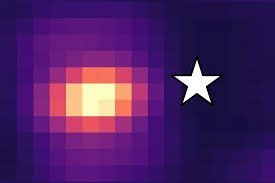
The team applied this new software to existing JWST data of three specific stars: HIP 65426, 51 Eridani, and TYC 5899. The result? The image of 51 Eridani suddenly revealed a giant exoplanet that had been lost in the noise.
While 51 Eridani b had already been detected by ground-based telescopes, the fact that JWST could now see it via software proves that many more hidden worlds are waiting to be uncovered. Best of all, this upgrade is entirely digital—no need to send a repair mission into deep space.
Why This Matters for Humanity
The ultimate goal of astronomy is to understand our place in the cosmos. As Rodrigo Ferrer-Chavez noted, we haven’t found planets exactly like our own Solar System yet—not because they don’t exist, but because we simply couldn’t see them.
By refining our detection techniques, we move one step closer to answering the eternal question: Are we alone? Every time we clear the glare, we bring the possibility of finding a second Earth into sharper focus.
This groundbreaking research was published in the prestigious journal Nature in November 2026.
📰 You May Also Like