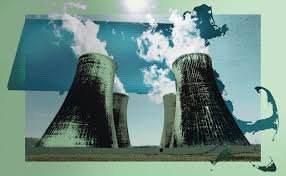
From Nuclear Fear to Climate Necessity: The New England Dilemma
For decades, the word Chernobyl has served as a haunting reminder of the catastrophic potential of nuclear energy. In Massachusetts, this legacy—coupled with the domestic trauma of Three Mile Island—created a political climate where the construction of new nuclear reactors was practically unthinkable. However, the urgency of the current climate crisis is forcing a dramatic pivot.
Governor Maura Healey, once a critic of the industry’s lack of oversight, is now leading a bipartisan push to reconsider nuclear power. The goal? To tackle two spiraling challenges simultaneously: slashing carbon emissions and reducing skyrocketing energy costs for residents.
The Ghost of Chernobyl and the Safety Debate
The hesitation to embrace nuclear power isn’t unfounded. The 1986 Chernobyl disaster remains the ultimate symbol of nuclear failure, leaving an enduring scar on the global psyche. Critics, such as antinuclear activists in Plymouth, argue that the risks of radioactive waste and potential meltdowns still outweigh the benefits.
In Plymouth, the decommissioned Pilgrim Nuclear Power Station stands as a physical reminder of this tension. While it once powered the region, it also left behind towering casks of radioactive waste, fueling fears that a “bad actor” or a technical failure could trigger a local disaster. However, proponents argue that the technology has evolved leaps and bounds since the 1980s.
Advanced Nuclear: Is it Truly Safer?
Modern energy experts suggest that the “nuclear renaissance” is different this time. They point to next-generation fission reactors, which are designed with passive safety systems that make the meltdowns seen at Chernobyl virtually impossible. According to the International Atomic Energy Agency (IAEA), rigorous global safety standards have transformed how plants are operated and monitored.
The push for nuclear energy is backed by a compelling logic: unlike wind and solar, nuclear power provides a constant, baseload supply of electricity without emitting greenhouse gases. For New England, which is struggling to meet aggressive emissions targets, nuclear is increasingly seen not as a risk, but as a strategic necessity.
The Holy Grail: Nuclear Fusion
While fission (splitting atoms) remains controversial, Massachusetts is also investing in the future of Nuclear Fusion. Companies like Commonwealth Fusion Systems are working to replicate the process that powers the sun—forcing atoms together to release massive amounts of energy.
- n
- No Meltdown Risk: Fusion does not carry the risk of a runaway chain reaction.
- Minimal Waste: It produces far less long-lived radioactive waste than traditional fission.
- Limitless Energy: If commercialized, it could provide nearly infinite clean power.
Conclusion: A Calculated Risk for a Greener Tomorrow
The transition from the fear induced by Chernobyl to the adoption of advanced nuclear technology is not a “slam dunk.” Cost overruns and the unresolved issue of permanent waste disposal remain significant hurdles. Yet, as the climate clock ticks, the conversation has shifted from “Should we use nuclear?” to “How can we use it safely?”
For New England, the path forward involves a delicate balance: honoring the lessons of the past while innovating for a sustainable, affordable energy future.