The Complex Landscape of Russian and Belarusian Athletes at the 2026 Winter Olympics
Officially, Russia remains banned from the Olympics following the 2022 invasion of Ukraine. This ban extends to Belarus, a key supporter of Russia in the conflict. However, the 2026 Winter Games in Milano Cortina will see athletes holding Russian and Belarusian passports competing under a unique designation: “Individual Neutral Athletes,” or AINs. This raises significant questions about fairness, political statements, and the spirit of the Olympic truce.
What Does ‘AIN’ Status Mean?
The International Olympic Committee (IOC) has cleared 13 Russian and 7 Belarusian athletes to compete as AINs, provided they meet stringent conditions. This means no Russian flags, anthems, or national colors will be displayed during competitions. Should an AIN athlete win gold, a specially commissioned, wordless anthem will be played. Crucially, AIN athletes are barred from participating in the Opening Ceremony on February 6th.
This approach mirrors the one taken at the 2024 Summer Olympics in Paris, stemming from a violation of the Olympic truce – a tradition of temporarily ceasing hostilities to allow peaceful competition. The IOC has delegated the initial decision of allowing athletes to compete to the international federations of each sport, resulting in a varied landscape of opportunities and bans.
The Screening Process: Ensuring Neutrality?
A dedicated IOC panel scrutinizes each athlete’s public activity and social media presence. Any evidence of support for the war in Ukraine or connections to the conflict is grounds for disqualification. Team sports are entirely off-limits for athletes from the banned countries. This is a critical point, as it prevents national representation even under the AIN banner.
Federation Decisions and Controversies
The response from international federations has been mixed. The International Bobsleigh and Skeleton Federation (IBSF) opted not to offer Russian athletes a pathway to qualification, a decision supported by five-time Olympic medalist Elana Meyers Taylor, who emphasized the importance of sport as a promoter of peace. Conversely, the International Skating Union and International Ski Mountaineering Federation allowed Russian athletes to qualify as neutrals.
Some federations, like the International Ski and Snowboard Federation and International Luge Federation, faced legal challenges from Russia, which successfully overturned initial bans through the Court of Arbitration for Sport. The International Biathlon Union, however, has steadfastly maintained its ban on neutral athletes.
A History of Bans and ‘Clean’ Athletes
Russia’s Olympic involvement has been fraught with controversy, beginning with a ban from the 2020 Tokyo Olympics and the 2022 Beijing Olympics due to state-sponsored doping. At the 2022 Winter Olympics, over 200 “clean” Russian athletes competed, winning an impressive 32 medals, including five gold. The subsequent invasion of Ukraine four days later led to a far stricter ban.
At the 2024 Summer Olympics in Paris, 15 Russian athletes competed as AINs, with two securing medals. Belarusian gymnast Ivan Litvinovich achieved gold in the men’s trampoline.
Impact on Team Sports and Star Athletes
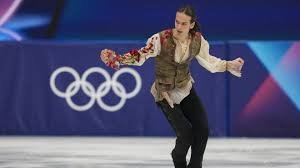
The exclusion of Russian and Belarusian athletes from team sports is particularly notable. This means NHL stars like Alexander Ovechkin and Evgeni Malkin will not participate in the Milano Cortina Games. While Russian figure skaters have historically dominated the women’s singles event, only Adeliia Petrosian has qualified as an AIN this year.
Ongoing Concerns and Ukrainian Opposition
Despite the screening process, controversy persists. The International Luge Federation withdrew the eligibility of three Russian athletes due to questions surrounding their neutrality, but further Russian participation in World Cup events sparked outrage. Ukrainian luger Anton Dukach voiced strong opposition, stating that AIN athletes are not truly neutral and continue to support the war. Accusations of illegal visits to annexed Crimea have also surfaced against some Russian athletes, further fueling the debate.
The situation surrounding Russian and Belarusian athletes at the 2026 Winter Olympics is a complex and sensitive one, highlighting the intersection of sport, politics, and international relations. The IOC’s attempt to balance inclusivity with condemnation of the war in Ukraine continues to be met with scrutiny and debate.
For more information on the Olympic movement and its stance on geopolitical issues, visit the official International Olympic Committee website.