
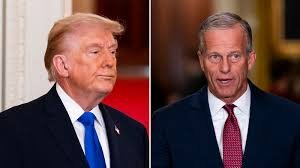
The Power Struggle: Trump, Thune, and the Senate’s Gatekeeper
In a move that underscores his desire for swift and unobstructed legislative action, Donald Trump has reportedly demanded that Senator John Thune, the newly minted GOP leader, take decisive action regarding the Senate Parliamentarian. This tension highlights a growing conflict between political ambition and the rigid procedural rules of the U.S. Senate.
Who is the Senate Parliamentarian and Why Do They Matter?
For those unfamiliar with the inner workings of Capitol Hill, the Senate Parliamentarian is a non-partisan official who serves as the ultimate authority on Senate rules and precedents. Their primary role is to advise the presiding officer on whether a piece of legislation adheres to the complex rules of the chamber.
The role becomes particularly critical during the budget reconciliation process. Because reconciliation allows certain bills to pass with a simple majority (bypassing the 60-vote filibuster), the Parliamentarian acts as a “gatekeeper,” deciding which provisions are strictly budgetary and which are not. If the Parliamentarian deems a provision “extraneous,” it is stripped from the bill.
Why Trump Wants the Change
Trump’s demand to fire the Parliamentarian is not merely a personal grievance but a strategic maneuver. Throughout his previous term and current political trajectory, he has viewed procedural “red tape” as an obstacle to his agenda. By pressuring John Thune to remove or replace the official, Trump aims to:
- n
- Accelerate Policy Implementation: Reducing procedural hurdles to pass sweeping changes quickly.
- Minimize Legislative Vetoes: Avoiding the “Byrd Rule” restrictions that often gut reconciliation bills.
- Assert Dominance: Signaling to the GOP leadership that the legislative branch should align closely with his executive vision.
The Challenge for John Thune
Senator John Thune now finds himself in a delicate position. As the leader of the Republican conference, he must balance the demands of a powerful former president with the traditional norms of the U.S. Senate. Removing a non-partisan official based on political pressure could trigger a backlash from institutionalists within both parties.
What Happens Next?
If Thune complies with Trump’s demands, it could set a precedent that transforms the Parliamentarian from a neutral arbiter into a political appointee. This would fundamentally change how laws are crafted in the United States, potentially making the legislative process more volatile and dependent on who holds power.
As the political landscape shifts, all eyes are on the relationship between Trump and the GOP leadership to see if the “gatekeeper” of the Senate will remain or be swept away in a wave of political restructuring.



