
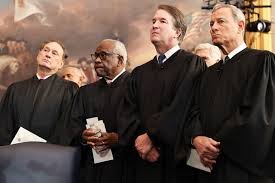
The Evolution of Precedent: Is the Supreme Court of the United States Using ‘Stealth Overrulings’?
For decades, the bedrock of the American legal system has been stare decisis—the principle that courts should follow previous decisions to ensure stability and predictability. However, a growing debate is emerging over whether the current Supreme Court of the United States is quietly dismantling this foundation.
Chief Justice John Roberts has publicly defended the court, arguing that his tenure has seen far fewer explicit “overrulings” than its predecessors. But legal scholars suggest that the real story isn’t in what the court explicitly kills, but in what it leaves on “life support.”
The Numbers Game vs. Legal Reality
During a recent appearance at the Georgetown University Law Center, Chief Justice Roberts cited statistics to suggest the court is moving deliberately, rather than recklessly. He claimed the Roberts Court overrules precedents less frequently than previous modern courts.
While the numbers may be accurate on the surface, critics argue they ignore a more subtle phenomenon: stealth overrulings. This occurs when the court effectively neuters a prior decision by rewriting its framework without formally announcing that the precedent has been overturned.
The Case of Voting Rights and ‘Intent’
A prime example of this shift can be seen in recent rulings regarding the Supreme Court of the United States and the Voting Rights Act of 1965. In the case of Louisiana v. Callais, the court’s conservative majority introduced a requirement that voters must demonstrate a “strong inference” of intentional discrimination to challenge redistricting maps.
- n
- The Previous Standard: In Allen v. Milligan (2023), the court adhered to an “effects test,” meaning if a map deprived minority voters of an equal voice, it could be discriminatory regardless of the lawmakers’ intent.
- The New Shift: By pivoting toward an “intent test,” the court has fundamentally altered the application of the law without explicitly overruling Allen.
As Justice Elena Kagan noted in her dissent, this approach effectively overturns congressional determination and court precedent without the transparency of a formal reversal.
Why ‘Stealth Overrulings’ Matter
Why does the distinction between a formal overrule and a practical shift matter? According to legal experts, including Steve Vladeck of Georgetown University, the lack of clarity creates a “grey zone” in the law.
“When only the lawyers understand what is and isn’t left of a prior decision, that makes it much harder to build the case for why the court, Congress or any other actor should respond.”
This ambiguity can make the judiciary appear more political, as legal outcomes begin to shift based on the ideological composition of the bench rather than established law. For more detailed archives on past cases, platforms like Oyez provide a comprehensive look at how these precedents have evolved.
Looking Ahead: The Future of Independent Agencies
The trend continues as the court reviews challenges to the independence of federal agencies. Precedents like Humphrey’s Executor (1935), which protected agency leaders from being fired without cause, are now under scrutiny. Even if the court doesn’t formally strike down the 1935 ruling, a series of narrow decisions may have already rendered it obsolete.
From the explicit reversal of Roe v. Wade to the subtle erosion of the Voting Rights Act, the Supreme Court of the United States is navigating a complex path between maintaining legal stability and pursuing a new judicial philosophy. Whether these “stealth overrulings” are a necessary correction or a threat to the rule of law remains one of the most critical legal questions of our time.



