
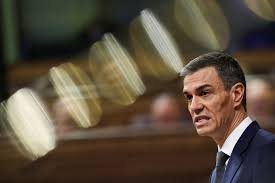
Spain Stands Firm Against US Strikes on Iran, Defying Trump
While most European leaders have cautiously navigated the complexities of supporting US military action against Iran, Spanish Prime Minister Pedro Sánchez has taken a decidedly different stance. He has been vocal in his criticism of recent US strikes, a move that has drawn the ire of the White House and sparked a diplomatic standoff. Rather than backing down, Sánchez and his government have doubled down on their opposition.
A Strong Alliance Tested
Spain boasts significant trade and investment ties with the United States, and is a key NATO member. In 2023 alone, approximately 4 million Americans visited the country. Furthermore, Amazon recently announced a nearly $40 billion expansion of its data center investments in Spain. Despite these strong connections, Sánchez has prioritized his nation’s principles.
The Use of Military Bases at the Heart of the Dispute
The current conflict centers around the use of major US military facilities located in southern Spain, at Rota and Morón. The Spanish government explicitly forbade the use of these bases to support the strikes against Iran. This decision prompted a furious response from former President Trump, who threatened to cut off trade with Spain, even suggesting the US could unilaterally use the bases regardless of Spanish consent: “We could just fly in and use it, nobody’s going to tell us not to use it.”
“No to War”: Sánchez’s Defiant Response
Within 24 hours of Trump’s outburst, Sánchez addressed the nation on television with a clear and unwavering message: “No to war.” He characterized the US and Israeli strikes as “reckless and illegal,” asserting that Spain would not be complicit in actions detrimental to global stability and contrary to its own values. Sánchez accused the US of engaging in “Russian roulette with the destiny of millions.”
A Critique of Leadership and Motives
Sánchez went further, criticizing leaders who prioritize self-interest over the well-being of their citizens. He stated, “It is absolutely unacceptable that those leaders who are incapable of fulfilling that duty use the smoke of war to hide their failures and, in the process, line the pockets of a few.”
Madrid Rejects White House Claims
When the White House claimed that trade threats had coerced Spain into cooperation, Foreign Minister José Manuel Albares swiftly refuted the assertion, stating that Madrid’s position on the conflict and the use of its bases remained unchanged.
Europe’s Dilemma and Varying Responses
This situation highlights a broader dilemma for Europe in dealing with a potentially assertive US administration. While many European leaders have attempted to appease Trump through flattery and compromise, Sánchez’s firm stance represents a significant departure. Germany and Italy received praise from Trump for their cooperation, while the UK initially resisted Washington’s request to use its bases, eventually conceding to allow their use for “defensive operations” – a concession that failed to impress Trump, who dismissed the UK’s current leadership as not being “Winston Churchill.”
Domestic Political Considerations
For Sánchez, this confrontation may be a calculated risk with potential domestic political benefits. Analysts suggest that his strong stance against US policy could bolster support for his fragile coalition government. Paco Camas García of Ipsos noted that Sánchez is “using foreign policy to regain the political initiative at home,” projecting leadership and strategic clarity, while simultaneously placing the conservative opposition in a difficult position given Trump’s low popularity in Spain.
Historical Precedent and Economic Realities
Sánchez’s opposition to the Iraq War was a key factor in his Socialist party’s electoral victory in 2004, a precedent he appears to be drawing upon. Economically, while Spain relies on the US for liquefied natural gas, the overall impact of potential trade disruptions may be limited, as the US accounts for only about 5% of Spain’s total trade. The European Union would likely defend any member state facing discriminatory trade practices.
Beyond Geopolitics: Addressing Social Media Concerns
Sánchez’s criticism of the US extends beyond geopolitical concerns. He has also been a vocal critic of US tech firms, accusing them of failing to adequately address hate speech and online abuse, particularly targeting him and his family. He recently announced a ban on social media for children under 16 in Spain.
After eight years as Spain’s prime minister, Sánchez appears increasingly willing to challenge US influence and the MAGA movement, prioritizing his nation’s values and interests on the global stage.
Source: CNN



