
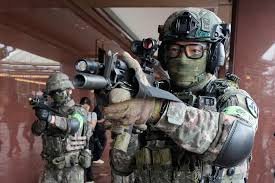
Unexpected Turn: US-South Korea Military Exercises Cut Short
In a move that has sent shockwaves through diplomatic circles, the joint military exercises between Seoul and Washington were abruptly shortened by six days this Wednesday. The decision follows sharp criticism from Donald Trump, who argued that such maneuvers send an “inappropriate and hostile” signal to North Korea.
While the Pentagon has attempted to reassure allies that the core military objectives remain intact, the sudden change in schedule has left many questioning the stability of the strategic alliance between the United States and South Korea.
The Trump Factor: A Personal Approach to Diplomacy
Donald Trump has long championed a unique diplomatic approach toward Pyongyang. Invoking his “very good relationship” with North Korean leader Kim Jong-un, Trump announced a significant reduction in U.S. participation in these annual drills, which are designed to simulate combat scenarios against North Korean forces.
The impact of this political intervention was immediate. The South Korean military confirmed that the maneuvers, originally scheduled to last until August 27, will now conclude this Friday.
A Strategic Setback for Seoul
For South Korea, this decision is more than just a scheduling change; it is a significant diplomatic blow. A South Korean military official admitted to the Agence France-Presse (AFP) that the move was “unusual,” highlighting the tension between Seoul’s security needs and Washington’s shifting political priorities.
Key takeaways from this development:
- n
- Reduced Duration: The drills were shortened by nearly a week.
- Diplomatic Signaling: Trump aims to avoid provoking Kim Jong-un to pave the way for future talks.
- Ally Friction: South Korea finds itself in an awkward position, balancing its historical alliance with the U.S. against the unpredictability of current U.S. foreign policy.
Looking Ahead: A Potential Meeting with Kim Jong-un
The reduction of military pressure coincides with a major announcement: Donald Trump has stated his intention to meet with Kim Jong-un later this year. This suggests a pivot toward direct negotiation as the primary tool for managing the North Korean nuclear threat, rather than the traditional strategy of “strategic patience” or military deterrence.
For more insights into the complex history of these relations, you can explore the BBC News Asia section, which provides extensive coverage on the Korean Peninsula.
Conclusion: Global Stability in Flux
As the world watches, the shift in the US-South Korea military posture reflects a broader trend of unpredictable geopolitical maneuvering. Whether this gesture of goodwill will lead to a lasting peace or create a security vacuum remains to be seen, but one thing is certain: the eyes of the world remain fixed on the volatile relationship between Washington and Pyongyang.



