
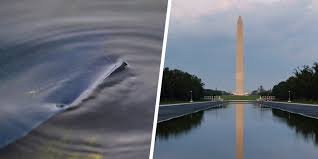
Uncovering the Truth: What Really Happened at the Lincoln Memorial Reflecting Pool?
The Lincoln Memorial Reflecting Pool is more than just a stunning architectural feature in Washington, D.C.; it is a symbol of American history and resilience. However, it recently became the center of a heated legal and political battle that raises questions about infrastructure quality and judicial fairness.
At the heart of the controversy is a legal case involving David Hearn, a former Olympic canoeist, who found himself in the crosshairs of the U.S. attorney’s office. Accused of destroying property during a visit in June, Hearn’s case took a dramatic turn when internal government documents came to light.
The Warning That Changed Everything
Court filings have revealed a critical piece of evidence: a National Park Service (NPS) engineer had already warned the administration about the pool’s condition. Long before the public accusations of vandalism, the engineer noted that the floor of the Lincoln Memorial Reflecting Pool was peeling.
According to the revealed emails, the peeling was not the result of external damage but was attributed to the renovation process itself. The key findings included:
- n
- Material Failure: The top layer of the liner was peeling due to “overspray” from the perimeter joint application.
- Contractor Error: The issues were linked to the installation performed by Atlantic Industrial Coatings.
- Minimal Impact: The engineer clarified that while the peeling was visible, it did not compromise the overall strength of the liner.
A Politically Charged Prosecution
Despite these internal warnings, the narrative pushed by the administration was one of vandalism. This led to the indictment of David Hearn, a move that his legal team describes as a “politically motivated prosecution.”
The situation escalated when the U.S. attorney’s office, led by Jeanine Pirro, eventually dropped the charges. The decision was based on the fact that the damage cited in the indictment was actually the result of flawed installation by the contractor, not intentional destruction by a visitor.
The Aftermath and Legal Implications
While the charges were dropped, the legal battle isn’t entirely over. Prosecutors have asked the court to dismiss the case “without prejudice,” which theoretically allows them to refile charges in the future. Meanwhile, Hearn’s attorneys are fighting to permanently block any further attempts to pursue the case.
This incident serves as a cautionary tale about the importance of transparency and the dangers of rushing to judgment before investigating technical failures in public infrastructure.
For more information on the preservation of national landmarks, you can visit the official National Park Service website to learn how these iconic sites are maintained.



