Justice Ketanji Brown Jackson Warns: Is the ‘Shadow Docket’ Eroding Trust in the Supreme Court?
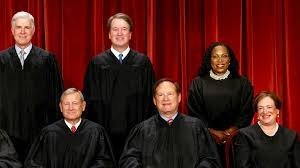
The Warning Shot: Justice Ketanji Brown Jackson on the ‘Shadow Docket’
In a poignant address at the University of the District of Columbia’s law school, Justice Ketanji Brown Jackson raised a critical red flag regarding the current trajectory of the Supreme Court of the United States (SCOTUS). The core of her concern? The increasing reliance on the emergency docket—a mechanism that many critics have dubbed the “shadow docket.”
Justice Jackson, a key liberal voice on the bench, argues that by bypassing traditional judicial rigor, the Court risks damaging its reputation and alienating the very public it is sworn to serve.
What Exactly is the “Shadow Docket”?
Unlike the standard review process, the emergency docket allows the Court to make rulings rapidly. These decisions often come without:
- n
- Detailed oral arguments.
- Comprehensive written explanations.
- The transparency typical of landmark judicial opinions.
While speed is sometimes necessary, Justice Jackson warns that using this “fast pass” for complex public policy issues creates a dangerous precedent. She asserts that when the Court “green-lights” potentially harmful acts without a clear explanation, public faith in the judicial system inevitably wavers.
Political Influence and the ‘Fast Pass’ Controversy
A significant portion of Justice Jackson’s critique centers on how the emergency docket has been utilized by political administrations. Specifically, she highlighted a pattern where the Trump administration successfully used these expedited rulings to advance controversial agendas, including:
- The construction of a multimillion-dollar White House ballroom.
- The dismissal of thousands of federal employees to reduce costs.
- The removal of temporary protected status for Venezuelan nationals.
Referring to data showing the Court sided with the Trump administration in approximately 80% of its emergency appeals, Jackson questioned why certain “privileged litigants” seem to have an easier path to the highest court than those waiting patiently in the standard queue.
A Departure from Judicial Tradition
Justice Jackson pointed out that this is not how the system was designed. According to her observations at Yale Law School, the emergency docket in the late 1990s was reserved almost exclusively for urgent matters, such as cases involving death row inmates, rather than broad public policy shifts.
By “touching the third rail” of divisive political issues through a non-transparent process, Jackson argues that the Court is venturing into territory that could permanently compromise its perceived neutrality.
The Stakes for American Democracy
The debate over the SCOTUS operating procedures is more than just a legal technicality; it is about the legitimacy of the law. As Justice Jackson continues to challenge the “unfortunate problem” of the emergency docket, the legal community remains divided on whether efficiency should ever outweigh transparency.
Is the Supreme Court prioritizing speed over justice? Justice Ketanji Brown Jackson believes the answer may be yes, and she is calling for a return to the standard review process to safeguard the integrity of the American legal system.
📰 You May Also Like