
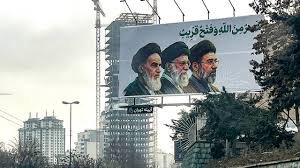
The Shifting Sands of ‘Imminent Threat’: A Fox News Analysis of Iran
The question of U.S. policy towards Iran is a critical one, demanding rigorous scrutiny from the press, Congress, and both political parties. The stakes – American lives, regional stability, and the prevention of nuclear proliferation – are simply too high for complacency. However, recent discourse has become increasingly muddled, particularly around the concept of an “imminent threat.”
The Core of the Debate
Following testimony from Director of National Intelligence Tulsi Gabbard, a divide emerged regarding who ultimately determines when a threat qualifies as “imminent.” Some lawmakers, primarily Democrats, expressed skepticism that the President should have sole discretion. Echoing similar concerns, some Republicans, wary of escalation, suggested a need for clear, near-term evidence of an attack before any preemptive action. Both sides, however, are missing a crucial point.
The intelligence community’s role is to provide assessments of capabilities, timelines, and intent – a range of probabilities and scenarios. It is not their place to definitively declare when a threat becomes “imminent.” That responsibility rests squarely with the President, who must integrate intelligence with military readiness, alliance considerations, and the broader strategic landscape.
Beyond a Simple Definition
The current debate treats “imminent threat” as if it has a precise, universally accepted definition. This is a fallacy. In traditional scenarios – troops massing, missiles fueling – identification might be straightforward. But nuclear proliferation is a gradual, opaque process, deliberately ambiguous. Iran advances its capabilities in stages – enriching uranium, refining weaponization, expanding delivery systems – without a single, definitive moment signaling a clear threshold crossing.
As Michael Oren points out, Iran has been waging a quiet war against America for decades. If the standard for an imminent threat requires the Ayatollah to be on the verge of launching a nuclear weapon, the United States will have already lost its ability to prevent the outcome.
Intent and Capability: The Defining Factors
A more realistic assessment recognizes that the convergence of capability and intent defines an imminent threat. And on intent, there should be no confusion. Since the 1979 revolution, Iran has consistently positioned itself in opposition to the United States and its allies. The slogan “Death to America” isn’t a passing phrase; it’s a core tenet of the regime’s identity. Iran funds and arms proxy groups, targets U.S. interests, and systematically undermines stability across the Middle East.
This long-standing hostility, coupled with advancing capabilities, fundamentally alters the nature of the threat. If Iran is within one to two years of developing a deliverable nuclear warhead while simultaneously expanding its ballistic missile capacity, that timeline is critically compressed. The closer these tracks converge, the fewer viable options remain.
The Risks of Delay and False Binaries
Some argue that without concrete evidence of an impending strike, the threshold for an imminent threat hasn’t been met, fearing that broadening the definition could justify unnecessary conflict. Others suggest restraint unless the intelligence community identifies a specific, near-term trigger, risking ignoring the cumulative nature of the threat. Both positions fall into a false binary: either the threat is immediate and undeniable, or it’s speculative and avoidable.
Presidential decision-making requires evaluating incomplete information, weighing uncertain outcomes, and choosing between imperfect alternatives. Acting too early has costs, but acting too late carries far more severe – and irreversible – risks. The concept of an imminent threat is contextual, dependent on trajectory, capability, and intent. In Iran’s case, the trajectory has been consistently provocative.
Judgment and Instinct: The President’s Burden
Ultimately, the President’s responsibility isn’t to wait for perfect certainty, but to determine when the risk of inaction outweighs the risk of action. This determination is informed by intelligence, shaped by history, and tested against consequences that no model can fully predict. The final decision doesn’t come from a spreadsheet; it comes down to judgment, real-world experience, pattern recognition, and even instinct.
The media’s focus on a narrow definition of “imminent” risks obscuring this broader reality. By emphasizing the absence of a singular trigger, it creates a false impression of urgency. A thorough debate should be grounded in an accurate understanding of the threat, not an artificially constrained definition.
This article is based on reporting and analysis from Fox News.



