Canada-EU Summit: Antonio Costa and Mark Carney Aim for a New Era of Digital Trade
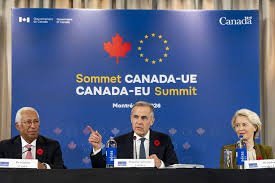
Strengthening Ties: The Canada-EU Summit in Montreal
In a strategic move to diversify international partnerships and bolster economic resilience, a high-profile summit took place in Montreal. Led by Prime Minister Mark Carney, the event brought together key European leaders, including European Commission President Ursula von der Leyen and European Council President Antonio Costa, to forge a deeper commercial and diplomatic bond between Canada and the European Union.
While discussions between Canada and the EU have been ongoing for years, this particular summit marks a significant scaling up of efforts to move beyond traditional trade, focusing instead on the modern pillars of the global economy: digital sovereignty and intellectual collaboration.
The Digital Frontier and Economic Sovereignty
One of the primary objectives of the summit was the finalization of a comprehensive agreement on digital trade. Antonio Costa expressed optimism that this agreement would provide a framework for secure, efficient, and transparent digital commerce.
- n
- Reducing Dependence: By strengthening digital ties with the EU, Canada aims to reduce its heavy economic reliance on the United States.
- Digital Sovereignty: The agreement seeks to protect data and ensure that economic sovereignty is maintained in an increasingly digitized world.
- Regulatory Alignment: Discussions focused on creating safeguards for children online and regulating large transnational companies to protect local cultures.
For more information on how international trade agreements work, you can explore the Global Affairs Canada portal.
Labour Mobility and the Creative Economy
Beyond trade and technology, the summit highlighted the importance of human capital. Antonio Costa advocated for greater labour mobility between Canada and Europe, specifically emphasizing easier student exchanges and scientific research partnerships.
Culture Minister Marc Miller pointed out that while labour mobility in the film and television industry is complex due to provincial tax credits, there is immense potential for co-productions. A prime example is the series Vikings, a successful Canadian-Irish collaboration. Miller also leveraged the premiere of the documentary Villeneuve: The Rise of a Legend to promote Canadian cinematic talent within European theatrical markets.
The “Associate Member” Debate and Political Friction
Not all aspects of the summit were without controversy. A point of significant contention remains the proposal for Canada to become an “associate member” of the European Union. While Carney, von der Leyen, and Antonio Costa voiced support for the idea, the proposal has faced resistance from several EU member states, including Germany.
Domestically, the summit has drawn criticism from Conservative circles. Critics argue that the meetings are “political theatre,” pointing out that nine of the 28 EU countries have yet to ratify a decade-old trade deal. The debate centers on whether these new agreements offer substantive economic gains or are merely symbolic gestures in the face of shifting trade dynamics with the U.S.
Conclusion: A Strategic Pivot
Despite the political friction, the collaboration between Antonio Costa and the Canadian leadership signals a clear strategic pivot. By focusing on digital trade and academic synergy, Canada is positioning itself as a key ally to the EU, ensuring that its economy remains diversified and its cultural footprint expands globally.
📰 You May Also Like