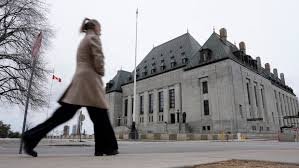
The Supreme Court of Canada: Guardians of Canadian Law
The Supreme Court of Canada stands as the final arbiter of the Canadian legal system. Established in 1875, it’s more than just a court; it’s a cornerstone of Canadian democracy, shaping the laws that govern the nation and impacting the lives of all Canadians. This guide provides a comprehensive overview of the Court, its history, its function, and its significance.
A Brief History of the Supreme Court
Initially, the Supreme Court wasn’t the powerful institution it is today. For its first several decades, it lacked the authority to overrule decisions made by the Judicial Committee of the Privy Council (JCPC) in London. It wasn’t until 1949, with the passage of the Supreme Court Act, that the Court achieved finality of appeal, becoming the ultimate court of last resort for all legal matters in Canada. This marked a crucial step in Canada’s legal independence.
The Role and Jurisdiction of the Court
The Supreme Court of Canada primarily hears appeals from provincial and territorial courts of appeal, as well as from the Federal Court of Appeal. It doesn’t typically hear cases for the first time; rather, it reviews decisions made by lower courts to ensure consistency and correctness in the application of the law. The Court’s jurisdiction covers a wide range of legal issues, including:
- Constitutional Law: Interpreting the Canadian Charter of Rights and Freedoms and determining the division of powers between the federal and provincial governments.
- Criminal Law: Reviewing convictions and sentencing decisions.
- Civil Law: Addressing disputes related to contracts, property, and torts.
- Administrative Law: Examining decisions made by government agencies and tribunals.
The Justices of the Supreme Court
The Supreme Court is comprised of nine justices, appointed by the Governor General on the advice of the Prime Minister. These appointments are crucial, as justices serve until age 75 and their decisions have a lasting impact on Canadian society. The current Chief Justice is Richard Wagner. The selection process has come under increasing scrutiny in recent years, with calls for greater transparency and diversity in the appointment of justices.
Landmark Cases and Their Impact
Throughout its history, the Supreme Court of Canada has delivered numerous landmark decisions that have profoundly shaped Canadian law and society. Some notable examples include:
- R. v. Morgentaler (1988): Struck down Canada’s abortion laws, affirming a woman’s right to choose.
- Vriend v. Alberta (1998): Extended human rights protection to include sexual orientation.
- Canada (Attorney General) v. Bedford (2013): Declared Canada’s prostitution laws unconstitutional.
These cases demonstrate the Court’s willingness to address complex and controversial issues, and its commitment to upholding the principles of justice and equality.
Accessing Information and Court Decisions
Information about the Supreme Court of Canada, including court decisions, case summaries, and news releases, is readily available on the Court’s official website: www.scc-csc.ca. You can also find detailed analysis of Court decisions from legal scholars and media outlets like The Globe and Mail and CBC News.
The Future of the Supreme Court
The Supreme Court of Canada will continue to play a vital role in shaping the legal landscape of the country. As Canadian society evolves, the Court will undoubtedly be called upon to address new and challenging legal questions. Its decisions will continue to be scrutinized and debated, but its commitment to upholding the rule of law will remain steadfast.