Shield of the Americas: A New Era of US Influence in Latin America?
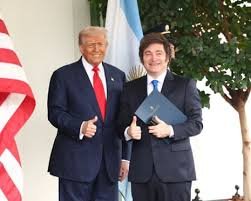
Donald Trump is set to host leaders from across Latin America at his Miami golf resort this Saturday, as he continues his ambitious effort to reshape the United States’ role in the region and counter China’s growing influence. This gathering, dubbed the ‘Shield of the Americas’ summit, is framed by the administration as a commitment to “promote freedom, security and prosperity” in the Americas. However, the guest list – and, crucially, those not invited – reveals a more complex and potentially divisive strategy.
The ‘Don-roe Doctrine’: A Revamped Monroe Doctrine?
Trump’s approach, often referred to as the “Don-roe Doctrine” – a modern take on the 19th-century Monroe Doctrine – aims to assert US dominance through a combination of economic and military pressure. Since returning to power, Trump has pursued a dramatic, and at times controversial, agenda, including vows to “take back” the Panama Canal, airstrikes against alleged narco boats, and even interference in the judicial systems of other nations. This assertive policy has drawn both praise and condemnation from across the hemisphere.
Who’s In, and Who’s Out?
The summit will welcome the right-wing presidents of Argentina, Bolivia, El Salvador, and Paraguay. However, the conspicuous absence of the leaders of Brazil, Mexico, and Colombia – three of Latin America’s largest economies – has sparked criticism. According to Brian Winter, editor-in-chief of Americas Quarterly, the summit appears to be a gathering of “ideological fellow travellers” – leaders with whom Trump shares a political alignment.
“This is the VIP level of the Latin America Trump Club,” Winter stated, suggesting the meeting is designed to solidify support among like-minded leaders. The agenda is expected to focus on security, migration, and the situations in Venezuela and Cuba, though concrete outcomes remain uncertain.
A History of Intervention and Controversy
Trump’s actions in Latin America have been far-reaching. He’s provided a multibillion-dollar bailout to Argentina’s Javier Milei, interfered in Honduran elections, and even suggested a “friendly takeover” of Cuba, despite warnings of a humanitarian crisis. These actions, along with the alleged abduction of Venezuelan President Nicolás Maduro and the support for military operations in Mexico, have raised concerns about the legality and ethical implications of US intervention.
As John Feeley, a former US ambassador to Panama, noted, Trump’s behaviour often resembles that of a ruthless figure like Tony Soprano. While some acknowledge the significant impact Trump has had on the region, others express alarm at the disregard for international norms.
Security Concerns and Regional Cooperation
Security is a paramount concern for many Latin American nations, and the US possesses unique intelligence and military capabilities. Mexico, even under a left-wing government, has accepted CIA assistance in tracking down drug traffickers. Stephen Miller, a key Trump official, emphasized the need for military force to combat drug cartels, comparing them to terrorist organizations like ISIS and Al-Qaeda.
However, the approach has also been met with resistance. Brazil’s President Lula da Silva has criticized US policies towards Cuba, arguing that the country’s food shortages are a result of external restrictions, not internal failings. Even Colombia’s Gustavo Petro, despite previously critical rhetoric, has sought to maintain a constructive relationship with the US.
The Failure of a ‘Theatrical’ Doctrine?
Benjamin Gedan, director of the Stimson Center Latin America programme, argues that the summit’s exclusive guest list highlights a fundamental flaw in Trump’s strategy. Excluding Brazil, Mexico, and Colombia – representing over half of the region’s population and economic activity – undermines the US’s claim to hemispheric dominance. Gedan suggests that the ‘Don-roe Doctrine’, while impactful, may ultimately prove to be more theatrical than effective.
Ultimately, the ‘Shield of the Americas’ summit represents a pivotal moment in US-Latin American relations. Whether it will foster genuine cooperation or exacerbate existing divisions remains to be seen.
Learn more about US-Latin American relations: