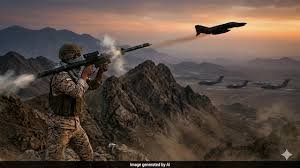
Man-Portable Air Defense Systems (MANPADS), often referred to as shoulder-fired missiles, represent a significant and complex aspect of modern warfare and global security. These relatively small, lightweight, and easily concealable weapons pose a substantial threat to civilian and military aircraft alike. This article provides a comprehensive overview of MANPADS, covering their history, technology, proliferation concerns, and ongoing mitigation efforts.
What are MANPADS?
A MANPADS is a self-propelled surface-to-air missile system designed to be portable by a single soldier or a small team. Typically, these systems consist of a missile contained within a launch tube, a gripstock, and a sighting system. Their portability and ease of use make them attractive to both state and non-state actors.
A Brief History of MANPADS
The development of MANPADS began in the 1960s, driven by the need to provide infantry units with a defense against low-flying aircraft. Early systems, like the Soviet 9K32 Strela-2 (SA-7 Grail), were relatively simple but effective. Throughout the Cold War, both the Soviet Union and the United States developed and deployed increasingly sophisticated MANPADS. The Stinger, introduced by the US in 1981, became particularly well-known for its effectiveness during the Soviet-Afghan War, where it was supplied to the Mujahideen.
How MANPADS Work: The Technology Behind the Threat
MANPADS operate on the principle of infrared (IR) homing. The missile’s seeker head detects the heat signature of the target aircraft’s engine exhaust. Modern MANPADS often incorporate imaging infrared (IIR) seekers, which create a thermal image of the target, making them less susceptible to countermeasures like flares. The missile is guided towards the target until impact. Some newer systems also include laser guidance for increased accuracy.
The Proliferation Problem & Global Security Concerns
The widespread availability of MANPADS is a major concern for international security. Their portability makes them difficult to track and control, and they have fallen into the hands of terrorist organizations and insurgent groups in various regions around the world. The potential for MANPADS to be used in attacks against civilian aircraft is a constant threat. Organizations like the U.S. Department of State actively work to counter MANPADS proliferation through international cooperation and assistance programs.
Mitigation Efforts & Countermeasures
Several measures are being taken to mitigate the threat posed by MANPADS. These include:
- International Cooperation: Efforts to strengthen export controls and track the movement of MANPADS.
- Destruction Programs: Programs to collect and destroy surplus or illegally held MANPADS.
- Aircraft Protection Systems: Development and deployment of countermeasures, such as infrared flares and directed infrared countermeasures (DIRCM), to protect aircraft from MANPADS attacks.
- Intelligence Gathering: Monitoring and disrupting the illicit trade in MANPADS.
The threat from MANPADS remains a significant challenge, requiring continued vigilance and international collaboration to prevent their misuse and protect global aviation security. Understanding the technology, history, and proliferation risks associated with these systems is crucial for developing effective countermeasures and safeguarding against potential attacks.