Cuba’s Crisis: A Nation Plunged into Darkness
Cuba is grappling with a deepening energy crisis, marked by widespread and prolonged power outages that are impacting every facet of daily life. The situation has been exacerbated by a confluence of factors, including a struggling economy, limited access to fuel, and the long-standing US economic embargo. Recent comments from former US President Donald Trump have further fueled the debate surrounding the island nation’s future.
Trump’s Controversial Remarks
On Monday, former President Trump mused about the possibility of the United States “taking” Cuba, describing it as a “big honor.” He stated, “All my life I’ve been hearing about United States and Cuba, when will the United States having the honor of taking Cuba?” He further added that he believed he could “do anything” with the island. These remarks sparked immediate controversy and raised questions about potential US intervention.
When pressed on the nature of any potential US action, Trump remained ambiguous, drawing comparisons to both the situation in Venezuela and the ongoing conflict with Iran. “I can’t tell you that,” he told reporters.
Nationwide Blackouts and Their Impact
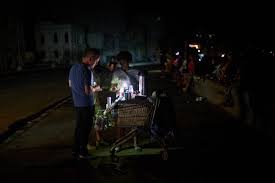
The latest crisis was triggered by a nationwide power grid collapse, the first since the US effectively curtailed oil shipments to Cuba. While power has been partially restored in some areas – roughly 55% of customers in Havana and all health centers in the capital had service by Tuesday afternoon – the recovery has been slow and uneven. Western and central-eastern regions have also seen some restoration, but the situation remains precarious.
Nationwide power outages have become increasingly frequent in recent years. Cuban officials attribute these to the US economic sanctions, while critics point to a lack of investment in the country’s aging infrastructure. The reality is likely a combination of both factors.
The Fuel Crisis and its Consequences
Cuba, a nation of approximately 10 million people, is heavily reliant on oil for electricity generation. The US blockade of fuel shipments has severely worsened the energy crisis, leading to intermittent power cuts, rationing of essential medical supplies, and a decline in tourism. Fuel prices have skyrocketed, reaching as high as $9 per liter on the black market – more than most Cubans earn in a year.
The impact extends beyond basic necessities. Airlines, including American Airlines, Delta, Jet Blue, and Canada’s Air Canada, have cancelled flights to Cuba due to fuel shortages and safety concerns. Internet traffic has also plummeted, with current levels at only one-third of normal volume, according to network monitoring company Kentik.
Public Response and Government Measures
The crisis has sparked public discontent. Residents of Morón recently took to the streets to protest electricity and food shortages. Cuban President Miguel Díaz-Canel has acknowledged the severity of the situation, stating that no oil has been delivered to the island in the last three months and that talks with the US to resolve bilateral issues are ongoing. He emphasized the “tremendous” and “brutal” impact of the US blockade on the country’s energy supply.
The government has announced emergency measures, including reduced school hours, postponement of events, and cuts to transport services. Hospitals are reducing services, and garbage is piling up due to a lack of fuel for waste collection.
US Policy and the Venezuelan Connection
The US disrupted Cuba’s oil supplies from Venezuela following its efforts to remove Venezuelan President Nicolás Maduro from power earlier this year. The US has also threatened tariffs on other nations exporting oil to Cuba, citing Havana’s alignment with “hostile countries.” Cuba vehemently rejects these claims and calls for an easing of US pressure.
Looking Ahead
The situation in Cuba remains critical. The energy crisis is not merely an economic issue; it is a humanitarian one, impacting the health, well-being, and daily lives of millions of Cubans. The interplay between US policy, Cuba’s internal challenges, and the potential for external intervention will continue to shape the island’s future.
This story has been updated with additional information.
CNN’s Sol Amaya, Morgan Leason, Billy Stockwell and Donald Judd contributed reporting. © 2026 Cable News Network. A Warner Bros. Discovery Company. All Rights Reserved. CNN Sans ™ & © 2016 Cable News Network.