AIN Country: Russia’s Complex Relationship with International Sports
Some Russians have dismissed the Games over the continued exclusion of their athletes. But the truth is international sport remains a significant arena for Moscow. Vitaly Milonov, a Duma member, famously stated years ago, “There’s no point in humiliating ourselves and begging to be let in. We have our pride.” He claimed international events were corrupted by the United States, alleging a bias towards “teams of vegans, queers and lesbians.” This sentiment echoes among some Russian commentators, questioning the value of participating in events they deem morally compromised.
The Political Significance of Sporting Success
Despite public pronouncements of indifference, the world’s biggest sporting event holds considerable importance for Moscow, serving as both a showcase for athletic talent and a potent political tool. Historically, Soviet leaders viewed the Olympics and world championships as a means of demonstrating national superiority. Vladimir Putin has continued this tradition, particularly as Russia faces challenges in areas like infrastructure, public health, and education. As political scientist Nina Kramareva explains, “Russia has nothing concrete to offer its own people. It has to give them gold medals.”
Navigating the Doping Scandal and Sanctions
Russia’s path back to Olympic participation is fraught with obstacles. The ongoing fallout from the 2014 doping scandal remains a major hurdle. Investigations by the World Anti-Doping Agency (WADA) revealed a massive, state-directed operation, leading to the loss of international certification for the Moscow testing lab and the Russian Anti-Doping Agency (Rusada). Currently, Russian athletes submit samples to Turkey.
Attempts to regain certification have been marred by controversy. The discovery of over 20,000 deleted files from the Moscow lab’s digital records led to sanctions, forcing Russian athletes to compete under the flag of the Russian Olympic Committee in Beijing and Tokyo. While Rusada officials claim compliance, WADA maintains they are still not fully in line with regulations. Veronika Loginova, Rusada’s chief, even announced her readiness to run for WADA president.
The Impact of the War in Ukraine
The war in Ukraine further complicated matters. Following the February 2022 invasion, the International Olympic Committee (IOC) and other governing bodies banned Russian and Belarusian athletes. Over 30 nations, including the UK, France, Italy, and the US (hosts of future Olympic Games), affirmed their opposition to their participation. Moscow condemned the ban as a politicization of sport.
The IOC, striving to balance political considerations with its charter, established a pathway for individual Russian and Belarusian athletes to compete as Individual Neutral Athletes (AINs). These athletes must be clean from doping, have no military connections, and not support the war. However, this concession has been met with criticism from Moscow, who view it as a demand to renounce their national identity.
The AIN Controversy and Future Outlook
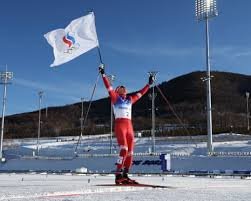
Despite the IOC’s efforts, challenges persist. The case of cross-country skier Aleksandr Bolshunov, a gold medalist in Beijing, illustrates the difficulties. His application for AIN status was initially rejected, despite arguments from his lawyer that he met all requirements. However, Bolshunov’s subsequent promotion within the Russian national guard and his presence at a pro-invasion rally were overlooked. This highlights a broader issue: many Russian athletes have ties to the military and express support for the government.
FIFA President Gianni Infantino recently stated that the ban “has not achieved anything,” and the IOC aims to allow Russian and Belarusian athletes to compete under their national flags in the 2026 Youth Olympics. Russian officials predict the Milano Cortina Games will be the last where Russians participate as neutrals. The situation remains fluid, with ongoing calls for support for AINs and accusations of conspiracy to exclude talented athletes like Bolshunov.
Ultimately, Russia’s relationship with international sports is a complex interplay of athletic ambition, political maneuvering, and national pride. As Bruce Berglund’s book, The Moscow Playbook: How Russia Used, Abused, and Transformed Sports in the Hunt for Power, details, this dynamic has been a long-standing feature of Russia’s pursuit of global influence.