
US-Iran Conflict Escalates: Latest Iran War News and Global Energy Implications
The geopolitical landscape of the Middle East has entered a volatile new phase. Following the collapse of a temporary ceasefire declared by President Donald Trump, the US military has intensified its operations, marking the seventh night of strategic strikes against Iranian targets. This escalation has sent shockwaves through regional allies and sparked concerns over global economic stability.
The US Offensive: Strategic Targets and Tactics
According to US Central Command (Centcom), the recent wave of attacks was meticulously planned to degrade Iran’s operational capabilities. The US employed a sophisticated combination of fighter aircraft, aerial drones, and warships to neutralize several key assets, including:
- n
- Surveillance Sites: Disrupting Iran’s ability to monitor regional movements.
- Military Logistics: Targeting the infrastructure that sustains troop movements and supply chains.
- Underground Weapons Storage: Neutralizing hidden arsenals.
- Maritime Capabilities: Including the destruction of a control tower in the port of Chabahar, which the US identifies as part of an IRGC maritime surveillance network.
Iran’s Retaliation: A Regional Ripple Effect
Iran has not remained passive. In a sweeping counter-offensive, Tehran targeted US allies across the region, aiming to pressure Washington by destabilizing neighboring states. The impact has been felt across several nations:
- Kuwait: Significant damage was reported at an oil facility and a power and water distillation plant, leading to fires and the deactivation of power generation units.
- Jordan: The Jordanian military successfully intercepted 10 Iranian missiles, preventing potential casualties or infrastructure damage.
- Bahrain: National air defences successfully thwarted multiple Iranian attacks.
Humanitarian Impact and Infrastructure Collapse
Beyond the military installations, the conflict is taking a heavy toll on civilian infrastructure. In Iran’s Hormozgan province, the consequences are severe. Reports indicate that attacks on electricity and desalination plants near Jask have left approximately 10,000 people in 20 villages without drinking water.
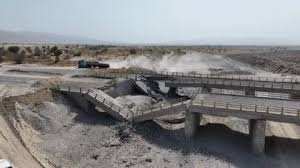
Furthermore, the communication blackout is worsening, with over 100 telecommunications masts knocked out, disrupting mobile, landline, and internet services. While the White House maintains that strikes are exclusively on military targets, verified footage showing the destruction of the Gariveh Bridge and reports of seven civilian deaths in Hormozgan suggest a more complex and devastating reality on the ground.
The Global Energy Crisis: The Strait of Hormuz
Perhaps the most alarming aspect of this conflict for the international community is the status of the Strait of Hormuz. With the US re-imposing a naval blockade and Iran declaring the Strait closed to shipping, the world’s energy security is at risk.
Roughly one-fifth of the world’s oil and liquefied natural gas (LNG) typically passes through this narrow waterway. The International Energy Agency (IEA) has expressed grave concerns regarding global energy supplies, as the halt in traffic could lead to skyrocketing fuel prices and economic instability worldwide.
What’s Next?
With the ceasefire officially over and diplomacy at a standstill, the region remains on a knife-edge. As both superpowers dig in—one with naval blockades and the other with regional missile strikes—the international community watches closely to see if a diplomatic window will reopen or if the world is heading toward a full-scale regional war.



