
A Landmark Decision for Indigenous Sovereignty in Quebec
In a powerful demonstration of democratic will, the Innu community of Pessamit on the North Shore has sent a clear message to the government. In a recent referendum, 63% of voting members rejected a proposed agreement with Hydro-Québec and the provincial government—a deal designed to settle decades of historical disputes and pave the way for new energy projects.
While the financial stakes were staggering, the community chose ancestral rights and thorough consultation over a quick payout. This decision highlights the growing tension between Canada’s green energy ambitions and the necessity of genuine Indigenous reconciliation.
The Stakes: Billions of Dollars vs. Ancestral Land
The proposed agreement was not just a simple settlement; it was a massive financial package. The Quebec government and Hydro-Québec offered $1.3 billion to resolve long-standing legal battles. However, the potential value of the deal could have soared:
- n
- Immediate Settlement: $1.3 billion to end judicial disputes.
- Potential Growth: Some estimates suggested the total value could have reached $6 billion if new hydroelectric plants and wind projects were realized.
- Fund Management: The money would have been managed by Pessamit to support social, economic, and community development.
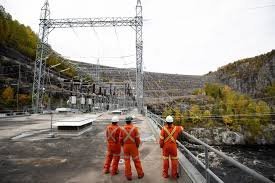
Despite these figures, the community’s primary concern remains the Nitassinan—the ancestral territory of the Innu people. For nearly 70 years, the community has accused Hydro-Québec of exploiting this land without their blessing, noting that 13 hydroelectric plants and 16 dams already operate within their ancestral borders.
Why the Agreement Failed: A Lack of Trust and Time
Why would a community reject billions of dollars? The answer lies in the process. Critics and community members pointed to a rushed timeline and a lack of transparency.
The community had less than ten days to analyze, debate, and vote on the agreement. René Simon, Chief of the Pessamit Innu Council, admitted that this short window likely contributed to the “No” vote. Furthermore, experts like engineer Marie St-Gelais have argued that the government failed to consult the community during the drafting phase.
“We must first settle the past before agreeing on a future that is unknown,” says St-Gelais, emphasizing that financial compensation cannot replace the resolution of historical grievances.
The Energy Dilemma: Hydro-Québec’s Pressure
This rejection comes at a critical time for Hydro-Québec. As Quebec pushes toward decarbonization and economic growth, the demand for electricity is expected to double by 2050. The utility needs to add up to 200 terawatt-hours (TWh) of energy, with a significant portion needed by 2035.
The failed deal included partnerships for new high-voltage lines and wind projects, as well as a potential new plant near the Bersimis-1 complex. Now, the utility must return to the drawing board to find a way to balance energy security with the sovereignty of the Pessamit people.
What Happens Next?
Hydro-Québec has stated it remains open to dialogue. However, the path forward requires more than just a larger check. To achieve a sustainable agreement, the province must prioritize:
- Deep Consultation: Moving beyond “information sessions” to genuine co-creation of agreements.
- Historical Acknowledgement: Directly addressing the 70 years of unauthorized land use in the Nitassinan.
- Transparent Timelines: Allowing communities ample time to engage in democratic deliberation.
For more information on Indigenous rights and land claims in Canada, you can visit the Crown-Indigenous Relations and Northern Affairs Canada portal.



