
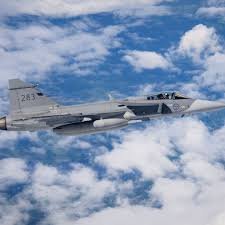
Strengthening the Skies: Sweden and Germany Forge Strategic Air Defense Alliance
In a significant move to bolster European security, Sweden has announced a deepened strategic partnership with Germany. This collaboration aims to revolutionize air defense and accelerate the development of cutting-edge unmanned systems, ensuring that the region remains resilient in an ever-changing geopolitical landscape.
The agreement was formalized during the recent NATO summit in Ankara, where Swedish Defense Minister Pal Jonson and his German counterpart, Boris Pistorius, signed a “letter of intent.” This document serves as the foundation for a more integrated approach to protecting sovereign airspace through technological innovation.
Innovation Beyond the Pilot: The Shift to Unmanned Systems
One of the most exciting aspects of this partnership is the shared focus on unmanned systems. As modern warfare evolves, the integration of drones and autonomous aircraft is becoming critical. By combining Swedish engineering with German industrial power, both nations hope to lead the next generation of aerial surveillance and combat support.
Key areas of cooperation include:
- n
- Joint R&D: Collaborative research into autonomous flight capabilities.
- System Integration: Ensuring that unmanned platforms can communicate seamlessly with manned fighter jets.
- Strategic Defense: Enhancing the rapid response capabilities of NATO allies in Northern Europe.
The Saab Gripen: A European Powerhouse in the Fighter Jet Market
While unmanned tech is the future, the present is dominated by the legendary Saab JAS 39 Gripen. Minister Pal Jonson highlighted a growing global interest in this versatile fighter jet, noting that Sweden remains one of only two European nations—alongside France—capable of fully developing and producing state-of-the-art fighter aircraft.
The Gripen’s reputation for efficiency, agility, and low operating costs has made it a top choice for nations seeking high-performance air superiority. This is further evidenced by the recent landmark deal with Ukraine, which has signed a contract to acquire 16 of the latest generation Gripen E fighter jets to strengthen its own aerial defense.
Why This Matters for Global Security
The synergy between Sweden and Germany isn’t just about hardware; it’s about strategic autonomy. By reducing reliance on non-European suppliers, the EU strengthens its own defense industrial base.
For those interested in how these alliances fit into the broader global framework, exploring the official NATO strategic concept provides valuable context on how member states are adapting to new threats.
As the world watches the deployment of the Gripen E in Ukraine and the rise of unmanned collaborations, it is clear that the future of the fighter jet is not just about speed—it’s about intelligence, integration, and international cooperation.



