Inside Iran’s Secret Underground Missile City: A Bold Statement of Power
Inside Iran’s Secret Underground Missile City: A Bold Statement of Power
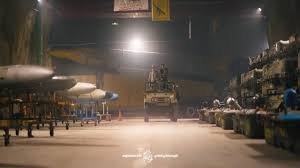
In a move that has sent ripples through the geopolitical landscape, Iran has officially unveiled what it describes as a new “missile city.” This sprawling underground complex, showcased by the Islamic Revolutionary Guard Corps (IRGC), serves as both a strategic fortress and a psychological tool, designed to signal resilience in the face of international pressure.
The revelation comes at a critical juncture. While Qatar continues to mediate delicate negotiations between the United States and Iran, the display of ballistic and cruise missiles suggests that Tehran is keeping its military options wide open.
The Engineering of Stealth: More Than Just Bunkers
This “missile city” isn’t merely a storage facility; it is a sophisticated network of launch sites and production hubs. According to reports from the Tasnim News Agency, the facility was toured by top military officials, including Maj.-Gen. Ali Abdollahi and Brig.-Gen. Majid Mousavi.
Technical analysts and OSINT experts have highlighted several key features of the arsenal housed within these depths:
- n
- Fattah-1 Ballistic Missiles: Medium-range missiles equipped with advanced maneuvering reentry vehicles (RVs) designed to evade interception.
- Khiber Shekan Capabilities: Observations suggest the use of maneuverable RVs, potentially derived from Fateh-1 technology, increasing the precision of strikes.
- Civilian Disguises: One of the most cunning aspects of the facility is the use of modified commercial trucks. These vehicles look like standard civilian transport but hide a missile that can be raised into a launching position in seconds.
A Strategic Response to External Strikes
The timing of this unveiling is no coincidence. For years, officials from the US and Israel have claimed to have degraded Iran’s ability to produce and launch long-range weaponry. Specifically, Prime Minister Benjamin Netanyahu previously asserted that Iran had lost its capacity to produce ballistic missiles.
By showcasing this underground city, Iran is attempting to debunk those claims. The logic is simple: if it is buried deep enough, it cannot be destroyed. Even when surface launchers are hit, the IRGC claims that their infrastructure is designed to survive heavy bombardment, allowing them to simply “dig out” their assets and resume operations.
The Global Implications: Beyond the Middle East
The rhetoric accompanying the reveal has been stark. Maj.-Gen. Ali Abdollahi warned that any future attacks on Iranian soil could trigger a response that extends “beyond the region.” This indicates a shift in strategic thinking, suggesting that Iran may be prepared to project its missile power further than previously seen.
Despite this military posturing, there remains a glimmer of diplomatic hope. Both the US and Iran have expressed a cautious optimism regarding potential agreements, though the existence of these “missile production cities” adds a layer of complexity to any disarmament talks.
For a deeper understanding of the regional dynamics, you can explore the latest reports on Reuters regarding Middle Eastern security or visit the Council on Foreign Relations for expert analysis on nuclear and missile proliferation.
Key Takeaways from the Reveal
| Feature | Strategic Purpose |
|---|---|
| Underground Cities | Protection against airstrikes and concealment. |
| Modified Civilian Trucks | Stealth deployment and urban camouflage. |
| Maneuverable RVs | Increasing the probability of hitting targets despite defenses. |
📰 You May Also Like