
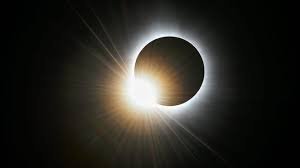
Solar Eclipse Alert: Where and How to Witness the Celestial Spectacle
Prepare your calendars and your protective gear! A breathtaking solar eclipse is approaching, promising a celestial display that will captivate millions. Whether you are chasing the dramatic darkness of totality or witnessing a partial alignment, this event is a must-see for any space enthusiast.
Who Gets to See the Total Solar Eclipse?
A total solar eclipse—the moment when the moon completely obscures the sun—is a rare experience that usually occurs only once every 18 months. According to NASA, the upcoming path of totality will stretch across several regions, including:
- n
- Greenland and Iceland
- Northern Russia
- Spain and parts of Portugal
- The Atlantic Ocean
For those in these regions, the sky will darken significantly, allowing a brief window where the sun’s corona becomes visible to the naked eye. However, for the rest of the world, the experience will be slightly different.
Partial Solar Eclipse: What to Expect in North America
While the United States is not in the path of totality, it is still in for a treat. From Alaska to North Carolina, as well as parts of Canada, Europe, and northwestern Africa, viewers will experience a partial solar eclipse.
During a partial eclipse, the moon covers only a portion of the sun. From a North American perspective, it will look as if a “bite” has been taken out of the sun. This event is scheduled for August 12, at approximately 11:34 a.m. ET, according to Time and Date.
Crucial Safety Tips: Protect Your Vision
Looking directly at the sun without proper protection can cause permanent eye damage. It is vital to follow these safety guidelines:
1. Use Certified Eclipse Glasses
Standard sunglasses are not sufficient. You must use solar eclipse glasses or handheld viewers that comply with the ISO 12312-2 international standard. This ensures the filters are strong enough to block harmful radiation.
2. How to Test Your Glasses
Before heading outside, the American Astronomical Society recommends a three-step safety check:
- Indoor Test: Look at a bright indoor light. You should see only a very dim glow.
- Outdoor Reflection Test: Look at a sunny day (but NOT the sun). You should only see reflections of the sun on objects, not the sun itself.
- The Quick Peek: Look at the sun for less than a second. It should appear comfortably bright with a dark background.
Note: If your glasses fail any of these tests or are scratched/damaged, discard them immediately.
Double the Magic: The Perseid Meteor Shower
The celestial excitement doesn’t end with the eclipse. The night immediately following the event will feature the peak of the Perseid meteor shower. Because this peak coincides with a new moon, the sky will be exceptionally dark, providing the optimal conditions for viewing what NASA considers the best meteor shower of the year.
Whether you are witnessing the solar alignment or counting shooting stars, this August promises to be an unforgettable month for astronomy lovers!



