
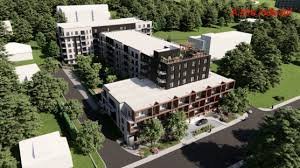
Controversy Hits Sherbrooke: The Battle Over the Vieux-Clocher Housing Project
The landscape of Sherbrooke is changing, but not everyone is happy with the blueprint. The proposed development on the site of the former Vieux-Clocher de Sherbrooke—a landmark demolished in February 2024—has become a focal point of municipal tension. While the goal is to increase housing density, a significant conflict has emerged regarding urban planning and infrastructure.
At the heart of the debate is a project by developer Multi-Flip, which aims to construct a multi-story building featuring a four-story facade and reaching up to eight stories at the rear. However, the plan is facing stiff opposition from local representatives, most notably Councilor Paul Gingues.
The Parking Dilemma: A Recipe for Gridlock?
The primary point of contention is the number of available parking spots. For a project proposing 241 housing units, only 171 parking spaces are planned. Councilor Gingues has voiced strong dissent, arguing that this number is simply “inconceivable” for the neighborhood’s current needs.
The concerns are not just about the residents, but the wider community. Gingues highlights several critical risks:
- n
- Impact on Local Businesses: Nearby merchants already struggle with parking; adding hundreds of new residents without adequate spots could stifle local commerce.
- Street Congestion: There is a high probability that Saint-Dominique Street will be turned into an informal parking lot, hindering traffic flow.
- The “Car-Free” Paradox: While the city aims to reduce car dependency, the councilor argues that current trends do not support such a drastic reduction in parking infrastructure.
Urban Pressure in the University District
The Vieux-Clocher project doesn’t exist in a vacuum. Sherbrooke’s university district is undergoing a massive transformation. The integration of several large-scale developments is putting an immense strain on the local road network. Gingues pointed to other major projects as evidence of the looming crisis, including:
- n
- The UTILE and Vertuo projects on Pacifique Street.
- The Humano District development on Galt West Street.
“I want traffic forecasting to be integrated into urban planning,” Gingues stated, warning that the cumulative effect of these projects will lead to significant congestion in the coming years.
The Controversy of the “Programme Immobilier Dérogatoire” (PL31)
Adding to the friction is the use of a specific regulatory mechanism. The project is being processed under what was formerly known as PL31, now the Programme immobilier dérogatoire. This Quebec government mechanism allows certain projects to bypass the traditional referendum process to accelerate construction.
For Councilor Gingues, the use of this “fast-track” system is an irritant, especially since the project lacks off-market (affordable) housing. He argues that if the city is to sacrifice democratic consultation to speed up development, there should be a clear social benefit, such as affordable housing units, which are currently absent from the proposal.
As Sherbrooke continues to grow, the tension between rapid development and sustainable urban planning remains a critical challenge for city officials. For more information on current urban regulations in Quebec, you can visit the official Government of Quebec Urban Planning portal.



