
Russia Drone Strike Near Polish Border: A Dangerous Escalation Near NATO Territory
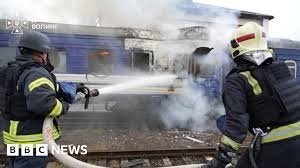
In a chilling escalation of the ongoing conflict, a Russian drone recently targeted a train in Yahodyn, situated just 2 kilometres from the Polish border. The attack occurred shortly after a diplomatic train carrying former UK Prime Minister Boris Johnson and several high-ranking European security officials had passed through the area, sparking fears of a targeted attempt to intimidate Western leadership.
A Narrow Escape for European Diplomats
The strike hit the engine of a stationary train, but fortunately, no casualties were reported. According to Ukrainian authorities, all passengers had been evacuated just 15 minutes before the jet-propelled drone struck. The timing was particularly sensitive, as Boris Johnson and national security advisers, including the UK’s Jonathan Powell, were returning from the Yalta European Strategy (YES) conference in Kyiv.
While Russia claimed it was targeting “railway infrastructure,” Ukraine’s state railway company, Ukrzaliznytsia, suggested that the diplomatic train may have been the intended target. The diplomatic transport managed to avoid the strike only because it left the station earlier than scheduled due to heightened security threats.
International Outrage and the ‘Terror’ Tactic
The incident has drawn sharp condemnation from global figures. Former CIA chief David Petraeus, who was present at the Yahodyn station during the strike, described the event as “terrifying” and labelled it the act of a “barbaric leader trying to terrorize Ukrainian civilians.”
Boris Johnson took to social media to question the logic behind the attack, describing it as a “random and senseless attack” that exemplifies the daily suffering of Ukrainians. He urged Western allies to urgently provide more advanced air defence systems to protect civilian infrastructure.
Key Geopolitical Reactions:
- Andrii Sybiha (Ukrainian Foreign Minister): Stated that Putin’s terror is now “knocking directly on the doors of the EU and Nato.”
- Donald Tusk (Polish Prime Minister): Held an emergency meeting, warning that Russian aggression is moving closer to Poland’s borders.
- Kaja Kallas (EU Foreign Policy Chief): Argued that the West must not be intimidated and should instead show unwavering support for Ukraine.
The Strategic War on Infrastructure
This strike is not an isolated incident but part of a broader Russian strategy to cripple Ukraine’s logistics. With air travel suspended since 2022, the railway network is the lifeline for millions. Recently, Russia has shifted its focus toward critical transit points:
- Border Crossings: Recent drone attacks hit crossings between Ukraine and Moldova.
- Civilian Transport: A female conductor was recently killed in a strike on a passenger train in southern Ukraine.
- Logistics Hubs: Several employees were killed at a railway depot in Kyiv earlier this month.
Furthermore, European nations are increasingly wary of Russian interference beyond Ukraine’s borders. Germany recently linked a drone attack at Leipzig airport to Moscow, while suspicious fires have been reported at defence facilities across Italy and Estonia.
Conclusion: The Cost of War
As the conflict persists, the targeting of civilian infrastructure near the borders of European Union member states signals a precarious new phase of the war. The call for increased sanctions and more robust interceptor missiles grows louder, as the international community seeks to raise the cost of aggression for the Kremlin.



