
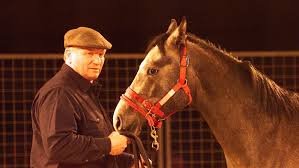
A Royal Encounter: Monty Roberts and the Horses of Queen Elizabeth
For those passionate about the equestrian world, few stories are as captivating as the intersection of royal prestige and innovative animal psychology. In a fascinating look back at the archives, we revisit a stormy morning in May 1989 at the Royal Mews in Windsor Castle, where the legendary horseman Monty Roberts demonstrated his groundbreaking training techniques for Queen Elizabeth.
The Queen, a lifelong lover of horses, provided several of her own young horses—fresh from the paddocks of Hampton Court—to see if Roberts’ unconventional methods could compress weeks of traditional training into a mere few minutes.
The Secret Behind the ‘Join Up’ Method
Monty Roberts is renowned for his “advance and retreat” approach, a method that leverages a horse’s natural curiosity and its innate need for leadership and companionship. Rather than using force, Roberts focuses on the psychological bond between human and animal.
The core principles include:
- Observation: Understanding the horse’s fear and anxiety levels.
- The Advance: Encouraging the horse to move away to establish a boundary.
- The Retreat: Backing off to allow the horse to approach out of curiosity.
- Join Up: The pivotal moment when the horse chooses to follow the human, signaling a bond of trust.
Training the Royal Steeds: A Step-by-Step Success
During the demonstration, Roberts worked with two distinct animals, proving the versatility of his system.
Case Study 1: Marmaduke
Marmaduke, a nervous three-year-old hunter, began the session looking suspicious and worried. Within 30 minutes, through a sequence of gentle movements and calming vocalizations, the transformation was staggering. By 12:00 PM, Marmaduke was not only accepting a saddle and bridle without panic but was being ridden by assistant Sean McCarthy with ease.
Case Study 2: The Future Polo Pony
The second challenge was a two-year-old chestnut filly, destined to be a polo pony for the Prince of Wales. Fillies are often more temperamentally challenging, and this particular horse was mistrustful and prone to freezing. However, Roberts’ patience prevailed. In just 35 minutes, the filly transitioned from a state of fear to allowing a rider on her back, marking a giant leap in her development.
Why This Matters for Modern Equestrianism
The success of these sessions at the Royal Mews highlighted a shift toward more humane and sympathetic handling of horses. By avoiding the “tug of war” and focusing on the horse’s mental state, Roberts demonstrated that trust is a more powerful tool than dominance.
The legacy of this encounter serves as a reminder that whether it is a common farm horse or a prized animal belonging to Queen Elizabeth, the language of trust and friendship is universal across the equine species.



