Lake Scugog Plane Crash: TSB Investigation Reveals Tragic Details of Fatal Accident
Tragedy at Lake Scugog: What Led to the Fatal Seaplane Crash?
New and sobering details have emerged regarding a devastating aviation accident in Lake Scugog that claimed the life of a 16-year-old boy. The incident, which occurred on July 18, 2025, near the community of Caesarea, has been the subject of an extensive investigation by the Transportation Safety Board of Canada (TSB).
The report, released recently, provides a step-by-step breakdown of the events that led to the aircraft striking a boat dock, resulting in a tragedy that has left the community mourning.
The Sequence of Events
The aircraft involved was an Ultravia Pelican Sport 600, a plane equipped with amphibious floats. On the day of the accident, the pilot was flying with a passenger who was potentially interested in purchasing the aircraft. While attempting to land, the following sequence occurred:
- Initial Touchdown: The plane touched down approximately 202 feet from the shoreline.
- The Bounce: According to TSB findings, the aircraft bounced off the water surface at least twice.
- The Go-Around: In an attempt to regain control, the pilot applied full power to perform a “go-around” (aborting the landing to try again).
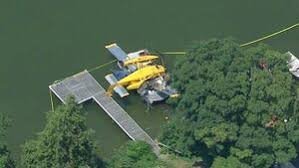
- The Impact: The aircraft veered sharply to the left, striking an initial dock before crashing into a second dock where a 16-year-old boy was standing.
The force of the impact killed the teenager instantly before the plane flipped upside down onto a moored pontoon boat. The pilot and passenger survived with minor injuries.
The Danger of “Glassy Water” Conditions
One of the most critical findings in the report is the environmental condition of the lake at the time of the crash. Investigators described the water as “glassy,” meaning there were no visible ripples on the surface.
While this might seem ideal, it is actually a significant safety hazard for seaplane operations. As noted in the Transport Canada Aeronautical Information Manual, glassy water makes it nearly impossible for pilots to accurately judge their height above the surface. This can lead to two dangerous scenarios:
- Stalling the aircraft too high above the water.
- Flying into the water with a nose-low attitude.
Safety Margins and Lessons Learned
To combat the lack of visibility in glassy water, pilots are often taught to fly close to shorelines to use land-based references to judge their altitude. However, the TSB emphasized that performing these manoeuvres near obstacles—such as docks, boats, and people—significantly reduces safety margins.
The report concludes that while landing in such conditions is technically possible, pilots must always evaluate if a safer landing area exists to avoid risking lives on the ground.
Note: The TSB is an independent agency and does not assign fault or determine criminal or civil liability.
📰 You May Also Like