Iran Attack on US Installations: Rising Tensions and the Battle for the Strait of Hormuz
Iran Attack on US Installations: Rising Tensions and the Battle for the Strait of Hormuz
The Middle East is once again on a knife-edge as the conflict between Iran and the United States enters a volatile new phase. Recent reports indicate a surge in hostilities, marked by a series of drone strikes and precision retaliations that threaten to destabilize one of the world’s most critical energy corridors.
The Spark: Drone Attacks in Bahrain
In a bold escalation, Iran launched a series of drone attacks targeting a U.S. radar installation in Bahrain. This marks the third such incident in recent days, signaling a strategic shift in Tehran’s approach toward American military assets in the Persian Gulf.
While Bahraini air defense systems successfully intercepted the drones and the U.S. military reported no casualties or equipment damage, the intent was clear. These attacks follow previous strikes on early warning radar facilities and helicopter bases, reflecting Iran’s growing frustration with the status quo.
U.S. Retaliation and the Strait of Hormuz
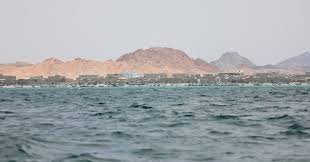
The United States responded swiftly to what it termed “aggression” toward its personnel. A U.S. fighter jet conducted a precision strike on a missile launch site on Qeshm Island, a strategic location belonging to Iran’s paramilitary Revolutionary Guard along the Strait of Hormuz.
This cycle of attack and counterattack has interrupted a brief lull in fighting, raising fears that a limited conflict could spiral into a full-scale regional war. The U.S. continues to utilize “precision munitions” to target operational capabilities without causing widespread civilian infrastructure damage.
The Economic Chokehold: The Naval Blockade
Beyond the kinetic strikes, a deeper economic war is being waged. For months, the U.S. has enforced a strict naval blockade in and around the Strait of Hormuz, a vital waterway for global energy supplies. This blockade aims to throttle the Iranian economy by curbing the flow of crude oil to global markets.
Strategic Military Buildup
To maintain this pressure and protect oil tankers, the U.S. has significantly increased its naval presence. Currently, the region hosts three aircraft carrier strike groups:
- n
- USS Theodore Roosevelt
- USS George H.W. Bush
- USS George Washington
This massive deployment provides the U.S. with unparalleled offensive firepower and missile interception capacity, far exceeding the force present at the start of the current conflict.
A Diplomatic Deadlock: “No War, No Peace”
Despite mediation efforts led by Qatar, peace negotiations have largely stagnated. Regional powers, including Saudi Arabia, the UAE, and Egypt, have condemned Iran’s actions as a violation of Bahrain’s sovereignty.
Iranian officials describe the current state of affairs as “no war, no peace.” Analysts suggest that Tehran is weighing a dangerous gamble: whether the cost of continued economic restraint under the blockade is higher than the risk of a full-scale military escalation.
What Happens Next?
The risk of renewed war no longer depends solely on decisions made in Washington. As economic pressures mount within Iran, the likelihood of Tehran initiating further provocations to break the blockade increases. The world now watches the Persian Gulf, where a single miscalculation could trigger a global energy crisis.
📰 You May Also Like