
The Silent Revolution: Redefining Womanhood Without Motherhood
For decades, the “traditional” life path has been presented as a rigid checklist: graduate school, land a stable job, get married, buy a home, and—most importantly—have a child. But for an increasing number of women in the United States, that final box is remaining unchecked by choice.
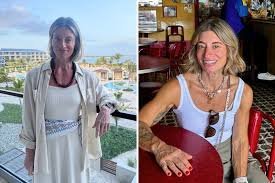
Take Tina, a 51-year-old New York resident. For years, she has faced the same faintly accusatory question: “Don’t you want kids?” Even her husband has dealt with the assumption that his child-free status is merely a “phase” that his wife will eventually “correct.” These interactions, while seemingly small, mirror a massive societal shift currently unfolding across America.
The Data: A Record-Breaking Trend
The shift isn’t just anecdotal; it’s statistical. According to research from the University of New Hampshire, a record number of women are living without children. The numbers tell a compelling story of changing priorities and autonomy:
- n
- The Gap: In 2024, there were 5.7 million more childless women of “prime childbearing age” than historical patterns predicted.
- The Growth: This is a significant jump from 2.1 million in 2016 and 4.7 million in 2022.
- The Majority: Of the 44.2 million American women between ages 20 and 39, approximately 23.1 million—or 52 percent—have not yet given birth.
Researchers note that this increase is most pronounced among women under 30, suggesting that younger generations are questioning the necessity of motherhood far earlier than their predecessors.
Breaking the Stigma of the “Child-Free” Choice
Despite the growing numbers, the social stigma surrounding the decision to remain child-free persists. For many women, the choice is met with confusion or judgment, as if the absence of a child diminishes their value as a woman.
Tina, who has found a massive community on TikTok under the handle @tinadmartinez, explains that for a long time, she felt unseen. “There were times when it almost felt like I couldn’t be considered a ‘great’ woman because I wasn’t a mother,” she shares. For her and thousands of others, online communities have provided the validation that traditional social circles often withhold.
Choice vs. Default: The Psychology of Discomfort
Why does the choice to not have a child unsettle people? Tina suggests it is because motherhood has historically been the “default” setting. When someone consciously chooses a different path, it forces others to realize that their own path was also a choice—one they may have never consciously examined.
It is important to note that choosing a child-free lifestyle is not an attack on parenting. As Tina puts it, recognizing the hard work of parents is entirely compatible with choosing not to be one. The goal is simply to stop “othering” women who find fulfillment in different ways.
Conclusion: Many Paths to a Fulfilling Life
The rise of the child-free movement is a testament to the expanding definition of a meaningful life. Whether through career, travel, art, or personal relationships, fulfillment is not one-size-fits-all. As society edges toward greater acceptance, the conversation is shifting from “Why don’t you want children?” to acknowledging that there isn’t one single right way to build a life.
To learn more about current demographic shifts in the US, you can explore the latest data from the U.S. Census Bureau, which tracks the evolving structure of American households.



