US-Iran Tensions: A Critical Crossroads for Global Oil Supply
Whenever tensions escalate between the United States and Iran, the world’s attention invariably turns to a single, strategically vital waterway: the Strait of Hormuz. This narrow passage is the linchpin of global energy security, with over $500 billion in oil and gas flowing through it annually. The recent deployment of the USS Gerald R Ford, one of the world’s largest warships, to the Gulf underscores the gravity of the situation, marking one of the most significant US military build-ups in the region since the 2003 invasion of Iraq.
The Strait of Hormuz: A Global Economic Lifeline
This month, Tehran signaled its potential response to any aggression by announcing the temporary closure of sections of the Strait of Hormuz. Iranian authorities conducted live-fire military drills within the strait, through which approximately 20 percent of the world’s oil supply is shipped. This move served as a stark warning of the potential economic repercussions should Washington proceed with threats against Iran, highlighting how quickly a regional conflict could destabilize global markets.
The Strait of Hormuz, the world’s most critical oil chokepoint, is a curved waterway situated between Iran to the north and Oman and the United Arab Emirates to the south. It’s roughly 50km (31 miles) wide at its entrance and exit, narrowing to about 33km (20 miles) at its tightest point. Despite its narrowness, it accommodates the world’s largest crude carriers.
The Numbers Behind the Strait
- Oil Transit: Approximately 20 million barrels of oil transit the Strait of Hormuz daily (2024 data).
- Annual Trade Value: Nearly $500 billion in annual energy trade relies on this waterway.
- Origin of Crude: Crude oil originates from Iran, Iraq, Kuwait, Qatar, Saudi Arabia, and the UAE.
- LNG Trade: Roughly a fifth of global Liquefied Natural Gas (LNG) shipments pass through the strait, with Qatar being the primary supplier.
- Asian Dependence: 84% of crude oil and condensate shipments and 83% of LNG volumes are destined for Asian markets.
Major consumers like China, India, Japan, and South Korea collectively account for 69% of all crude oil and condensate flows through the strait, making their economies particularly vulnerable to disruptions. The US Energy Information Administration (EIA) provides detailed data on these flows.
Geopolitical Leverage and Potential Disruptions
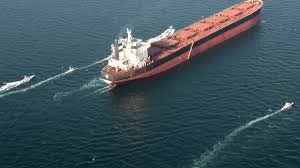
Under international law, states have sovereignty up to 12 nautical miles (22km) from their coastlines. The Strait of Hormuz, at its narrowest, falls entirely within the territorial waters of Iran and Oman, granting Tehran significant geographic leverage. Approximately 3,000 vessels transit the strait each month. Iran could effectively obstruct traffic through naval mines, fast attack boats, and submarines.
Iran’s parliament has previously approved a motion to close the Strait of Hormuz, though the final decision rests with Supreme Leader Ali Khamenei. Adding to the complexity, the Houthi group in Yemen, aligned with Iran, could potentially disrupt traffic through the Bab al-Mandab Strait, another crucial maritime chokepoint. Recent disruptions in the Bab al-Mandab Strait, following the conflict in Gaza, demonstrate the vulnerability of global shipping routes.
Economic Consequences of Disruption
According to Colby Connelly, head of Middle East content at Energy Intelligence, a full or partial closure of the Strait of Hormuz would have a “major impact on oil prices in the near term.” With limited alternative supply sources, especially considering OPEC+’s spare production capacity concentrated in the Gulf, the impact would be substantial. Saudi Arabia, the largest exporter through the strait (roughly 5.5 million barrels per day), would be significantly affected.
Samuel Ramani, an associate fellow at the Royal United Services Institute, warns of “severe inflationary effects for the global economy” due to increased fuel and factory costs. He also highlights potential investment disruptions in the UAE and potential setbacks for Saudi Arabia’s Vision 2030 projects. Several major Asian economies, including India (almost half of its crude oil imports) and Japan (nearly three-quarters of its oil imports), are heavily reliant on the Strait of Hormuz.
The situation demands careful monitoring and diplomatic efforts to prevent escalation and safeguard the stability of global energy markets.
Follow Al Jazeera English for continued coverage.