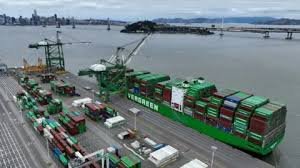
The Unexpected Impact of Tariffs on US Trade
Despite the implementation of sweeping tariffs by the US President, American goods imports continued to exceed exports last year, pushing the country’s trade deficit to a new record high. Official figures reveal the gap between the value of goods imported into the US and American products sold abroad widened by 2.1% compared to 2024, reaching approximately $1.2 trillion. This outcome runs counter to the White House’s stated goal of reducing the deficit, which argued that reliance on overseas goods weakens domestic production and poses national security risks.
The Tariff Strategy and its Initial Implementation
Last year saw the introduction of tariffs of at least 10% on goods from nearly every country globally. The intention, as stated at the time, was to stimulate local manufacturing and improve the competitiveness of American firms in international markets. However, these measures, often exceeding rates from previous trade deals, caused significant disruption for businesses and the global economy.
While trade flows experienced considerable volatility, they didn’t cease. Imports of goods reached a record $3.4 trillion, driven in part by business investment in artificial intelligence and a surge in demand for computer parts and equipment. Exports also reached a new high, despite declines in shipments of US food, cars, and car parts – sectors particularly affected by the trade changes.
Shifting Trade Dynamics and China
US trade with China, encompassing both imports and exports, decreased, reducing the deficit by roughly 30% to $202.1 billion – the smallest deficit in around two decades. However, the US still recorded record trade gaps with other nations, including Mexico, Vietnam, and Taiwan.
The overall deficit in goods and services, including travel and digital services, stood at $901.5 billion last year, nearly unchanged from $903.5 billion in 2024. The White House maintains that the benefits of these policies will take time to materialize. However, frequent revisions to the tariffs have created uncertainty regarding the long-term strategy.
Ongoing Legal Challenges and Future Outlook
The President has leveraged the threat of tariffs during international negotiations, most recently issuing an executive order imposing additional taxes on countries continuing trade with Iran. The Supreme Court is currently reviewing a challenge to the duties brought by businesses and states, which could potentially invalidate a significant portion of last year’s tariffs. Should the administration lose this case, officials have indicated preparedness to reinstate the tariffs using alternative mechanisms.
Analysts at Wells Fargo anticipate continued adjustments in supply chains and a modest increase in imports despite the ongoing tariffs. A report by the JP Morgan Chase Institute revealed that many businesses had begun shifting operations away from China even before the new tariffs took effect. The bank’s data suggests that foreign imports remained relatively stable last year, despite a tripling of monthly tariff payments.
The report concluded that the full effects of trade policy changes may only become apparent after a significant delay, citing policy uncertainty and the challenges of finding alternative suppliers. As one toymaker noted, the ongoing uncertainty surrounding trade policy requires constant vigilance.
Further Reading
- Investopedia – Tariff: A comprehensive definition and explanation of tariffs.
- World Trade Organization – Tariffs: Information on tariffs from a global trade perspective.
Copyright 2026 BBC. All rights reserved. The BBC is not responsible for the content of external sites. Read about our approach to external linking.