Stock Futures Plunge as Oil Surges Amidst Iran Conflict
NEW YORK (AP) – Oil prices soared to their highest level since 2023 on Friday, fueled by the ongoing conflict in Iran, while a concerning report on the U.S. job market sent stock futures lower, marking Wall Street’s worst week since October. The S&P 500 experienced a 1.3% decline following the release of data indicating a decrease in U.S. jobs last month, coupled with oil prices exceeding $90 per barrel.
This combination of a weakening economy and persistent high inflation presents a challenging scenario for investors. The Federal Reserve faces a difficult dilemma, as it lacks effective tools to address both issues simultaneously. The Dow Jones Industrial Average plummeted as much as 945 points before closing with a loss of 453 points, or 0.9%, while the Nasdaq composite fell 1.6%.
“You can’t sugarcoat this report,” stated Brian Jacobsen, chief economic strategist at Annex Wealth Management. “A negative payrolls number combined with a significant jump in oil prices will undoubtedly raise concerns about stagflation risks.” Stagflation, a term economists use to describe the undesirable combination of a stagnant economy and high inflation, is becoming a growing worry. A separate report released on Friday revealed that U.S. retailers experienced lower sales in January than anticipated, suggesting that consumer spending, a key driver of the economy, may be reaching its limit.
The Federal Reserve’s Dilemma
Typically, when the economy falters and the job market weakens, the Federal Reserve lowers interest rates to stimulate growth. Lower rates can ease borrowing costs for households and businesses, and boost asset prices. The Fed reduced interest rates several times last year and signaled further cuts were possible this year.
However, lowering interest rates can exacerbate inflation. The Fed’s options are becoming increasingly constrained as rising oil prices, driven by disruptions in the energy industry, are pushing inflation higher. The price of Brent crude, the international benchmark, jumped 8.5% to settle at $92.69, briefly surpassing $94 – its highest level since September 2023. U.S. crude also breached the $90 mark for the first time since 2023, rising 12.2% to $90.90.
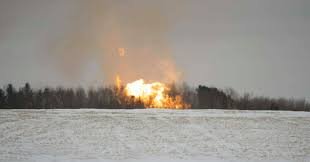
The surge in oil prices is attributed to the escalating conflict in the Middle East, which has impacted critical oil and gas production and transportation routes. The Strait of Hormuz, a vital waterway for global oil shipments, is a key area of concern. While the U.S. government announced a plan to provide insurance for ships traversing the strait, it had limited impact on the market.
Analysts warn that if oil prices continue to climb, potentially reaching $100 per barrel and remaining elevated, it could severely strain the global economy. Historically, the U.S. stock market has demonstrated resilience following conflicts, provided oil prices don’t rise excessively for an extended period. However, the uncertainty surrounding the future trajectory of oil prices has caused significant volatility in financial markets this past week.
Market Volatility and Geopolitical Risks
On Monday, the S&P 500 initially fell 1.2% but recovered to end the day with a slight gain. President Trump’s stance on the conflict, calling for an “unconditional surrender” of Iran, has further heightened tensions.
In the bond market, Treasury yields fluctuated, influenced by rising oil prices and disappointing U.S. economic data. The yield on the 10-year Treasury initially rose to 4.19% before retreating to 4.14%. Smaller companies, often more reliant on borrowing and sensitive to economic conditions, experienced the steepest declines. The Russell 2000 index of small stocks fell 2.3%. Companies with high fuel costs, such as Old Dominion Freight Line, Carnival, and Southwest Airlines, also suffered significant losses.
Market Summary (March 6, 2026):
- S&P 500: -90.69 points to 6,740.02
- Dow Jones Industrial Average: -453.19 points to 47,501.55
- Nasdaq Composite: -361.31 points to 22,387.68
European indexes slumped, while Asian markets showed a mixed performance. Hong Kong’s Hang Seng jumped 1.7%, while South Korea’s Kospi recovered from a historic plunge on Wednesday.
Further Reading: Investopedia – Stagflation