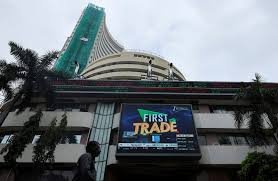
The Sensex serves as a crucial indicator of the Indian economy’s performance. Here’s why it matters:
- Investor Sentiment: It reflects the overall mood of investors regarding the Indian stock market and economy.
- Economic Health: A rising Sensex generally indicates a healthy and growing economy, while a falling Sensex can signal economic concerns.
- Investment Decisions: Investors use the Sensex as a benchmark to evaluate the performance of their investment portfolios.
- Global Perception: The Sensex is closely watched by international investors, influencing foreign investment flows into India.
Furthermore, the Sensex is often compared to other global indices like the S&P 500 (US) and the FTSE 100 (UK) to gauge India’s economic standing on the world stage. For more information on global market comparisons, consider resources like
Investopedia’s Sensex overview.
Factors Influencing the Sensex
Numerous factors can influence the Sensex’s movement, including:
- Economic Growth: India’s GDP growth rate significantly impacts investor confidence.
- Government Policies: Fiscal and monetary policies, such as interest rate changes and tax reforms, play a crucial role.
- Global Market Trends: International economic events and market fluctuations can affect the Sensex.
- Corporate Earnings: The financial performance of the companies included in the Sensex directly impacts its value.
- Political Stability: Political events and policy changes can create uncertainty and affect investor sentiment.
Staying informed about these factors is essential for understanding the Sensex’s fluctuations and making informed investment decisions.
Sensex: A Deep Dive into India’s Stock Market Barometer
The Sensex (BSE Sensex), officially the Bombay Stock Exchange Sensitivity Index, is arguably the most widely tracked stock market index in India. But what exactly *is* the Sensex, and why should investors – both seasoned and novice – pay attention to it? This article provides a comprehensive overview of the Sensex, its composition, how it’s calculated, and its significance in the Indian economy.
What is the Sensex?
Simply put, the Sensex represents the performance of the 30 largest and most actively traded companies listed on the Bombay Stock Exchange (BSE). Think of it as a snapshot of the overall health of the Indian stock market. It’s a free-float market-capitalization weighted index, meaning companies with larger market capitalizations (total value of outstanding shares) have a greater influence on the index’s movement. This differs from other indices that might be price-weighted.
The Composition of the Sensex
The 30 companies included in the Sensex represent a diverse range of sectors, including banking, finance, energy, technology, consumer goods, and pharmaceuticals. Some of the prominent companies currently included are Reliance Industries, HDFC Bank, Tata Consultancy Services (TCS), Infosys, and ICICI Bank. The composition isn’t static; companies can be added or removed based on criteria like market capitalization, liquidity, and industry representation. The BSE regularly reviews the index to ensure it accurately reflects the Indian economy. You can find the current list of companies on the
BSE India website.
How is the Sensex Calculated?
The Sensex is calculated using the free-float market capitalization method. This means that only the shares readily available for trading in the market are considered. The formula involves dividing the total free-float market capitalization of the 30 companies by a divisor, known as the ‘divisor’. The divisor is adjusted periodically to account for corporate actions like stock splits, dividends, and rights issues, ensuring the index’s continuity. Understanding the calculation is less important for the average investor than understanding the *trend* the Sensex represents.
Why is the Sensex Important?
The Sensex serves as a crucial indicator of the Indian economy’s performance. Here’s why it matters:
- Investor Sentiment: It reflects the overall mood of investors regarding the Indian stock market and economy.
- Economic Health: A rising Sensex generally indicates a healthy and growing economy, while a falling Sensex can signal economic concerns.
- Investment Decisions: Investors use the Sensex as a benchmark to evaluate the performance of their investment portfolios.
- Global Perception: The Sensex is closely watched by international investors, influencing foreign investment flows into India.
Furthermore, the Sensex is often compared to other global indices like the S&P 500 (US) and the FTSE 100 (UK) to gauge India’s economic standing on the world stage. For more information on global market comparisons, consider resources like
Investopedia’s Sensex overview.
Factors Influencing the Sensex
Numerous factors can influence the Sensex’s movement, including:
- Economic Growth: India’s GDP growth rate significantly impacts investor confidence.
- Government Policies: Fiscal and monetary policies, such as interest rate changes and tax reforms, play a crucial role.
- Global Market Trends: International economic events and market fluctuations can affect the Sensex.
- Corporate Earnings: The financial performance of the companies included in the Sensex directly impacts its value.
- Political Stability: Political events and policy changes can create uncertainty and affect investor sentiment.
Staying informed about these factors is essential for understanding the Sensex’s fluctuations and making informed investment decisions.