Navigating the Radio-Canada website? You’re aware that we and a limited number of our advertising partners use cookies to collect certain data and use it to improve your experience and present you with personalized content and advertising. If you are uncomfortable with the use of this information, please review the privacy settings of your device and browser before continuing your visit.
Budget 2026-2027: A Mixed Bag for Prince Edward Island’s Francophone Community
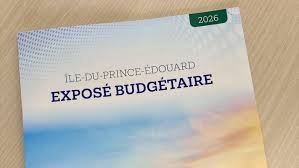
The release of Prince Edward Island’s operating budget for 2026-2027 on Tuesday has sparked a range of reactions within the province’s Francophone community. While some aspects have been welcomed, concerns remain regarding the allocation of funds and the specific needs of the Acadian and Francophone population.
A Lack of Francophone Focus?
Isabelle Dasylva-Gill, Executive Director of the Société acadienne et francophone de l’Île-du-Prince-Édouard (SAF’Île), expressed disappointment over the absence of a clear Francophone lens within the budget. “It’s like a large pot of money, but we’re not certain what share the Acadian and Francophone community will receive,” she stated. Despite this concern, she acknowledged positive elements, such as the $20,000 allocated to Acadian Heritage Month, now celebrated in August.
Early Childhood Education: Relief and Caution
The continuation of the $10-a-day childcare program was met with relief. Kathleen Couture, Executive Director of the Association des centres de la petite enfance francophones (ACPEFÎPÉ), also praised the 2% wage increase for early childhood educators. However, she remains cautious regarding the promise of 400 new childcare spaces. “We want to know how many of these 400 spaces have already been allocated and how many are truly new,” she explained, fearing that the needs of the Francophone community might be overlooked. She hopes the announced 400 spaces will include the 85 requested for new centres in the Évangéline and Charlottetown regions, planned for 2028, but awaits official confirmation.
As CBC News reports, concerns remain about budget cuts affecting family support programs managed by the Francophone organization Cap enfants.
Education Funding: A Balancing Act
The operating budget for the Commission scolaire de langue française (CSLF) is increasing by 6.3%, representing an additional $1.6 million. However, Ghislain Bernard, the CSLF’s Director General, clarified that $1.3 million of this increase will be used to cover collective agreement wage increases and rising energy costs, leaving only $300,000 for new services and programs. While acknowledging this is limited for a growing school commission, he remains pragmatic. “We didn’t get everything we wanted, but it’s not all negative. Our financial situation is good.” He plans to invest the new funds in hiring teachers and educational assistants, leveraging a $600,000 surplus accumulated due to unfilled positions.
Post-Secondary and Cultural Sectors Face Challenges
The Collège de l’Île is facing a stagnant budget, prompting President Robert Bullen to prioritize spending, focusing on administrative costs and optimizing space utilization. In the cultural sector, Ghislaine Cormier, Executive Director of the Fédération culturelle de l’Île-du-Prince-Édouard, expressed concern over the lack of budget increases, stating that the cultural sector is consistently underfunded.
Economic Development and Debt Concerns
Stéphane Blanchard, Director General of the Réseau de développement économique et d’employabilité (RDÉE), welcomed measures to stabilize the economy for small and medium-sized businesses and funds to address trade tensions with the United States. However, the looming record deficit raises concerns about potential austerity measures in the future. SAF’Île remains vigilant, ensuring the budget’s benefits are realized by the Francophone community. All stakeholders await detailed information on fund distribution in the coming weeks and months.
Stay informed with Radio-Canada Info for ongoing coverage of this developing story and its impact on Prince Edward Island.